Drooping reeds
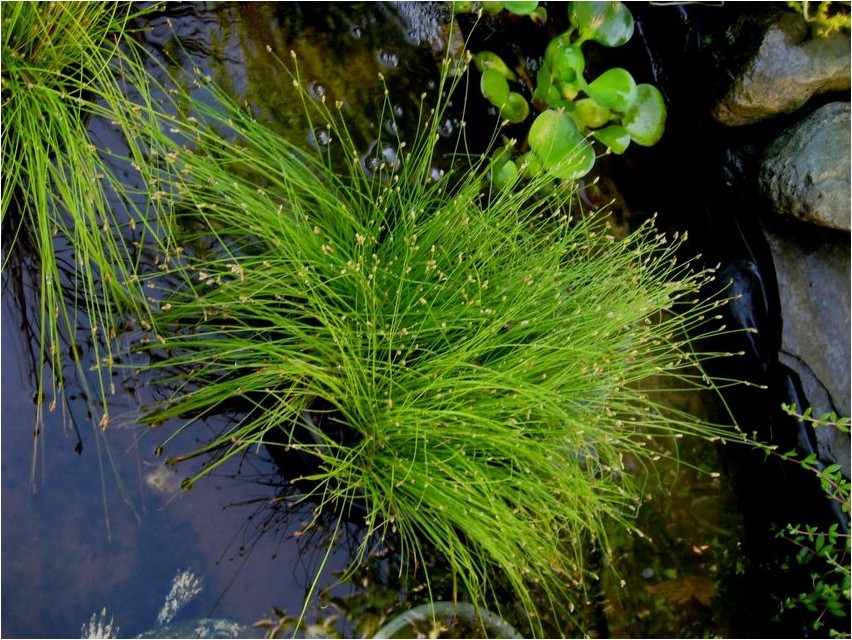
Drooping reed is sometimes also called graceful reed and drooping isolepis; in Latin the name of this plant will be as follows: Scirpus cernuus.
Drooping reed belongs to plants of the family called sedges, in Latin the name of this family will be: Cyperaceae.
Description of the drooping reed
To successfully grow drooping reeds, you will need to provide this plant with a sunny light regime or a partial shade regime. In summer, this plant should be provided with abundant watering, and air humidity should be kept at an average level. The life form of drooping reed is a herbaceous plant.
It is recommended to grow this plant indoors exclusively on bright windows if you want the plant to form quite impressive thickets. In winter gardens you can often find drooping reeds in various compositions. In the summer, this plant is widely used for landscaping numerous artificial reservoirs. However, in the autumn the plant should be moved indoors. As for the maximum size in cultivation, the height of the drooping reed can be about twenty-five to thirty centimeters, and the diameter of the bush can reach thirty centimeters.
Description of the features of care and cultivation of drooping reeds
In order for the plant to develop favorably, it is necessary to replant it every year. Moreover, such a transplant can be performed both in spring and in autumn. It is permissible to use a variety of pots, however, the most preferable are shallow, but wide pots. As for the composition of the soil mixture, to prepare it you will need to mix one part each of leaf soil and sand, as well as two parts of turf soil. It is noteworthy that the acidity of the soil can be either neutral or slightly acidic.
It’s important to remember that this plant ages quite quickly, resulting in the drooping reed becoming bald. For this reason, it’s recommended to divide this plant frequently, and in the spring, it should be rejuvenated by promptly removing old leaves that have already turned yellow. If there’s insufficient light, the leaves of the drooping reed can become very elongated. Even with adequate moisture, if the plant is kept too cool, the leaves will turn yellow and eventually begin to dry out. If the humidity is very low, the leaf tips will begin to dry out. In some cases, this plant can be damaged by aphids. It’s important to remember that chemical treatments can have a very negative impact on the plant’s development.

During the entire dormant period, maintain a temperature between 10°C and 15°C. When grown indoors, this dormant period is forced and lasts from October to February.
Drooping reed can be propagated either by seed or by dividing the plant during replanting. This second method is recommended to be performed approximately once every two years.
It’s important to remember to protect the plant from direct sunlight; otherwise, the leaves will fade. A constant amount of water (about five centimeters) should be present in the tray.