Euphorbia purple
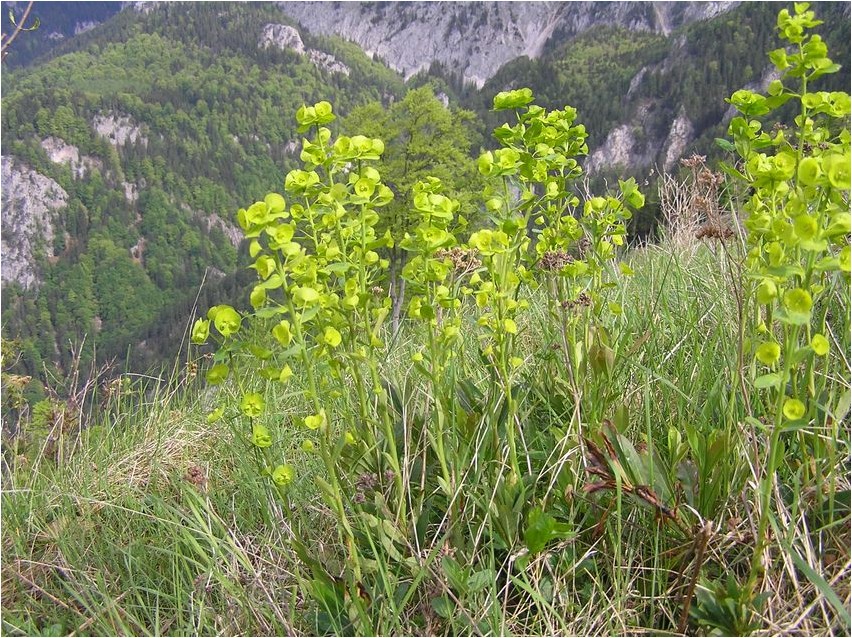
Purple euphorbia is one of the plants of the family called Euphorbiaceae; in Latin the name of this plant will be as follows: Euphorbia purpurata Thniil. (E. dulcis auct.).
As for the name of the purple milkweed family itself, in Latin it will be: Euphorbiaceae Juss.
Description of purple milkweed
Purple spurge is a perennial herbaceous plant whose height will range between twenty and fifty-five centimeters. This plant is naked. The rhizome of purple milkweed is fleshy, it can be either branched or simple. The stems of this plant are present in one or two pieces, they are arched, ascending, their thickness is approximately two to four millimeters, most often the stems will also be endowed with three to nine axillary peduncles, the length of which is three to seven centimeters. There are only five or six apical peduncles of purple milkweed, they are quite thin. The length of the involucre leaves of this plant will be about two to six centimeters, and the width will be seven to nineteen millimeters; such leaves will be green in color. The cup of purple milkweed is short, cube-shaped, its diameter is three millimeters, and its length is about two millimeters, the cup itself is completely naked. There are only four nectaries of purple milkweed, they will be transversely elliptical, at first they are colored yellowish-green, and then acquire a dark purple color. The triangular nut of this plant is three-grooved and flattened-spherical, its length is approximately three millimeters and its width is three and a half millimeters. The length of the purple milkweed seed is two millimeters, and the seed itself is compressed-ovate-spherical.
This plant blooms from May to June. Under natural conditions, this plant is found on the territory of Moldova, as well as in the Carpathians and in the Dnieper region of Ukraine. For growth, this plant prefers edges, mountain forests, beech forests, places on lawns and near streams, places among bushes, sometimes the plant is found on the plain, but most often it grows in the mountains at an altitude of one and a half thousand meters above sea level. Most often, purple spurge grows in carbonate soil.
Description of the medicinal properties of purple milkweed
Purple euphorbia is endowed with very valuable healing properties, and it is recommended to use the herb of this plant for medicinal purposes. The term grass includes leaves, flowers and stems. The presence of such valuable healing properties should be explained by the content of higher fatty acids, flavonoids and the diterpenoid ingenol in this plant.
Euphorbia purpurea is used as a very effective emetic, diuretic and laxative.

To prepare a very effective diuretic based on this plant, you will need to take two grams of dry crushed milkweed purple herb per three glasses of water. The resulting mixture should be boiled over fairly low heat for about five minutes, then this medicinal mixture is left to infuse for two hours, after which it is important to strain this mixture very carefully. Take the resulting healing remedy based on purple milkweed two to three times a day, one tablespoon. It is important to note the fact that in order to ensure the greatest effectiveness when taking this remedy, it is recommended not only to strictly follow all the rules for preparing such a healing remedy, but also to comply with all the rules for taking such a remedy based on milkweed purple.





