Tamarind
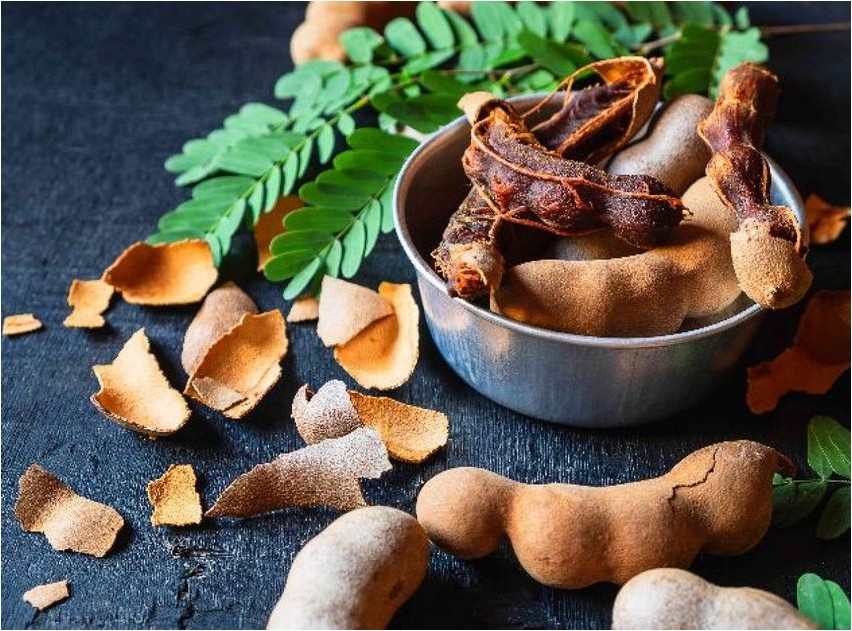
Tamarind (Latin: Tamarindus indica) is a plant known as the Indian date palm and belongs to the legume family.
Description
Tamarind can reach a height of twenty meters. In areas with dry seasons, it is also an evergreen. Incidentally, this tree somewhat resembles an acacia. The wood of this beautiful tamarind consists of soft, yellowish sapwood and a fairly dense, rich, dark-red heartwood (also known as heartwood).
The paripinnate, alternately arranged leaves of tamarind are formed by thin leaflets, ranging from ten to forty in number. The five-membered, pinkish flowers are gathered in rather colorful inflorescences and are distinguished by their irregular shape.
The tamarind fruits resemble brownish beans, approximately two to three centimeters wide and about twenty centimeters long. Each fruit contains a large number of dense seeds and a rather fleshy pericarp. Incidentally, to speed up germination, the seeds are often nicked.
This crop is widely cultivated in almost all tropical countries.
Uses
The edible pulp of the delicious tamarind fruit has long been used as a spice in Latin American and rather distinctive Asian cuisine. It is also an essential ingredient in the long-loved British fruit sauce HP and the well-known Worcestershire sauce. The rather sour pulp of unripe fruits is widely used in a wide variety of savory dishes. And the much sweeter ripe tamarind is perfect for making all kinds of appetizers, original drinks, and wonderful desserts.

The pulp of tamarind fruits is often preserved in sugar syrup—this delicacy has the appearance of a viscous brownish mass with a very pleasant, fruity, sweet and sour taste. Tamarind is also considered an integral part of southern Indian cuisine, where it”s used to prepare kuzambu, countless chutneys, and many other dishes. Tamarind sauce is often served with lamb dishes.
In some Asian countries, tamarind pulp is also used in temples, where it quickly removes patina, accumulated grease, and various oxides from brass jewelry.
The very distinctive tamarind wood, distinguished by its rich reddish hue, as well as unprecedented strength and high density, has long been used for the manufacture of high-quality floor coverings and excellent furniture. And rods were once made from the branches of this tree.
In southern India, spreading tamarind trees are planted along roads to create shade over them. By the way, the numerous monkeys living there love to eat juicy fruits.
The fruits of this unusual exotic crop contain pectin substances, invert sugar and organic acids. Quite often they are used as a gentle laxative (especially good for children). Tamarind pulp produces pectin, and tamarind infusion is an excellent drink for fever.
The thiamine contained in these fruits is vital for the human body to maintain the health of the musculoskeletal system, as well as the nervous and digestive systems. Iron perfectly supplies the body with oxygen, and potassium promotes the proper functioning of smooth muscles and the heart.
The bark, leaves and pulp of the fruit have been used in medicine since time immemorial. In Ayurveda, they are used to cure diseases of the digestive tract, and in the Philippines, the leaves of this plant serve as an excellent raw material for preparing healing herbal tea that can relieve febrile conditions due to malaria.
Tamarind is also considered the official tree of Santa Clara in Cuba — an image of this plant can be seen on the city coat of arms.
It is noteworthy that in popular Mexican slang, traffic controllers are also called “tamarinds” — this is due to the characteristic color of their very original attire.
How to eat tamarind





