Agave
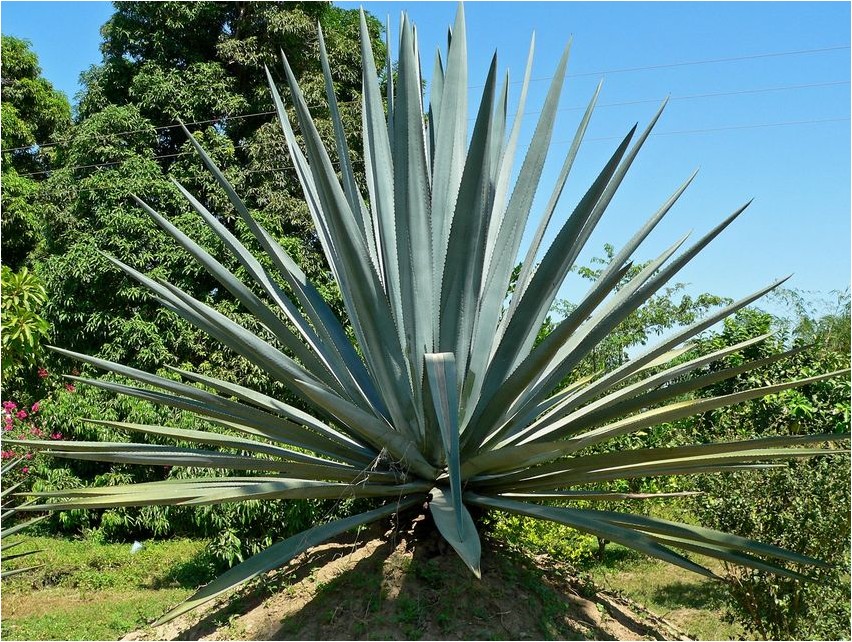
Agave is a genus of plants that belong to the subfamily Agave, in this genus there are more than three hundred different species.
In the wild, these plants grow mainly in Central America, especially Mexico.
After the discovery of the New World, agaves became known in Europe. Very often, coarse fabrics, ropes and ropes are made from agaves: natural fiber obtained from the leaves of the agave sisal plant is used for production. From the waste of this plant, wrapping paper is produced, as well as a strong drink called pulque: it is made from the sugary juice of Agave dark green, the strength of the drink will be approximately 6-18 degrees. By the way, world-famous tequila is also produced from blue agaves: the core of this plant is used for this, and the classic strength of tequila is fifty-five degrees.
Of course, completely different types of agave are used at home: American agave, retracted agave, Queen Victoria agave, and also filamentous agave. By the way, Agave filamentosa can be called one of the most popular indoor plants from this family. This plant will have very narrow leaves, colored in matte green tones, complemented by a white border. These leaves are noticeably raised upward. Each leaf has a thorn, and along the edges there are dry fibers, thanks to which this species got its name.
In indoor conditions, agaves bloom very rarely; in nature, this happens once in a lifetime, after which the plant dies after some time.
Agave cultivation

Of course, we can safely say that agaves will not require excessively long and problematic care. In fact, this is true, however, you still have to follow some specific rules. In the homeland of this plant, the sun always shines brightly, therefore, at home, agaves must be provided with constant contact with direct sunlight. In addition, such bright light should not be supplemented by slight shading.
Agave has a craving for fresh air, which is also due to its homeland and native natural conditions. The room where the agave is located must be regularly ventilated. In the summer, it is recommended to take the agave to the balcony or outside, where there will be constant contact with fresh air.
Agaves are not particularly fond of rain, so this plant should not be sprayed. In addition, the plant does not tolerate waterlogging of the soil. Therefore, agave requires moderate watering and good drainage. It is also necessary to water the plant only after the soil is completely dry. In winter, watering should be reduced.
Agave requires moderate temperatures in the summer, and in winter the plant will require approximately eight to twelve degrees of heat. In winter, the plant also does not require fertilizing, and the rest of the time it is necessary to add minerals, which have an extremely poor nitrogen content. Fertilizers should be applied in extremely limited quantities, approximately once every two to three weeks. Excessive amounts of fertilizer can have a negative impact on the plant itself, so you should be careful.
When planting, it is very important to maintain the position of the root collar above the ground. Sand should also be added around the neck, which will protect the plant from rotting in cool weather.
As for replanting, mature plants should be replanted approximately every two to three years. Young agaves require annual transplantation. For succulents, ready-made soil from the store is also suitable, but you can also prepare the soil yourself: for this you will need to combine turf soil, sand and peat in equal proportions. You can also add some brick chips.