Exochord
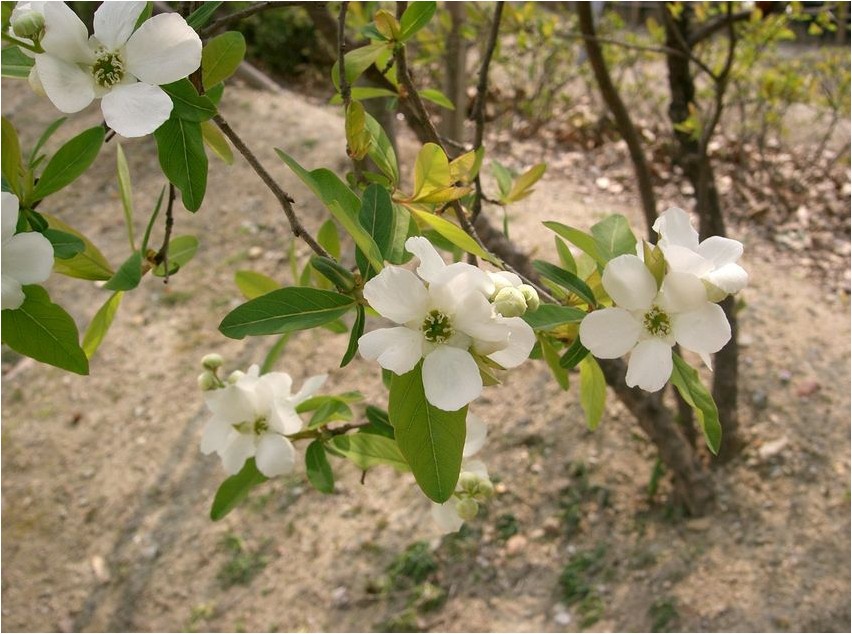
Exochorda (lat. Exochorda) is a genus of beautiful flowering shrubs and low trees of the Rosaceae family. The homeland of the exochord is considered to be China, Korea and Central Asia.
The genus includes 7 species (according to other sources only 5 species). Representatives of the genus are distinguished by increased decorative properties. Currently, the exochord is cultivated in many European countries and in Russia.
Characteristics of culture
Exochorda is a deciduous shrub or tree with entire alternate leaves that do not have stipules. The flowers are large or medium-sized, white, collected in terminal racemes. The fruit is a spherical or pear-shaped fused leaflet. Winged seeds. In the conditions of the European part of Russia, the exochord blooms in late May — early June, in regions with a warmer climate in late April — early May. Flowering is long-lasting, usually 3-3. 5 weeks. Today, several hybrid varieties have been bred, which are characterized by large flowers (more than 6 cm in diameter) and abundant flowering. The crop cannot boast of frost-resistant properties; it freezes slightly in harsh winters.
* Tien Shan exochorda (lat. Exochorda tianschanica) — the species is represented by graceful shrubs. The flowers are white, collected in multi-flowered racemes (15-17 pieces each). The fruits are small (compared to other types). Cultivated in many regions of the European part of Russia. Frost resistance is below average, in severe winters it freezes heavily, then takes a long time to recover. The species is drought-resistant and light-loving; fresh, permeable, fertile soils are desirable for growing plants; it also accepts calcareous soils.
*Exochorda Giralda (lat. Exochorda giraldii) — the species is represented by prostrate or upward-pointing shrubs up to 3 m high. Widely cultivated in the Crimea and the Caucasus. Also found in the Moscow region. The flowers of the species in question are white, with elongated petals. The flowers are collected in elongated racemes. Flowering lasts about 25-30 days. The fruits ripen in early October. Plants bloom 5-6 years after planting. The species is drought-resistant and winter-hardy. Prefers well-lit areas with fertile, drained, loose soil.
*Exochorda albertii is a highly branched shrub up to 4 m tall. The leaves are rich green, elliptical, and up to 6-7 cm long. The flowers are snow-white, gathered in multi-flowered terminal inflorescences. The fruit is a spherical or ovoid leaflet sitting on a short peduncle. Exochorda albertii is drought-resistant and heat-loving. This species is undemanding in terms of soil conditions, growing best in light, drained, moderately moist, and deep soils.

*Exochorda korolkowii is a shrub up to 3. 5-4 m tall. The leaves are oval-elongated, with a blunt tip. The flowers are white, up to 4 cm in diameter, gathered in racemose inflorescences. It blooms in late May — early June, and the fruits ripen in October. It begins bearing fruit only nine years after planting. Exochorda macrantha is cold-hardy; in severe winters, only the tips of young growth may freeze.
*Exochorda grandiflora (Latin: Exochorda x macrantha) is a hybrid obtained by crossing Exochorda macrantha and Exochorda racemosa. This hybrid produces shrubs up to 7 meters tall. It is frost-hardy and tolerates the conditions of central Russia. It blooms profusely, and its growth rate is average. It prefers brightly lit areas with fertile, light soil. It requires staking in winter, as its fragile branches can break under the weight of snow.
Propagation and Care
Exochorda is propagated by seeds, layering, and cuttings. All three methods are effective and can be mastered even by a novice gardener. Sow seeds immediately after harvesting in seedling containers. The emerging seedlings are regularly watered, weeded, and fertilized with complex mineral fertilizers. After 3-5 years, the plants are transplanted to their permanent location. Planting holes are prepared in advance, with a ridge formed at the bottom using a mixture of leaf mold and rotted manure with the addition of dolomite flour. Acidic soils are limed beforehand.
Exochorda requires infrequent watering, annual spring fertilizing with mineral and organic fertilizers, weeding, and pruning. Pruning is performed immediately after flowering. Nitrogen fertilizers are not recommended in summer. For the winter, the trunk area is mulched with peat or humus, and the bushes are covered with spruce branches.
PLANT THIS BUSH IN YOUR GARDEN! It will outshine the others with its blooms in the spring! EXOCHORDS
https://www. youtube. com/watch? v=NNMc4otahfg