Worsleya
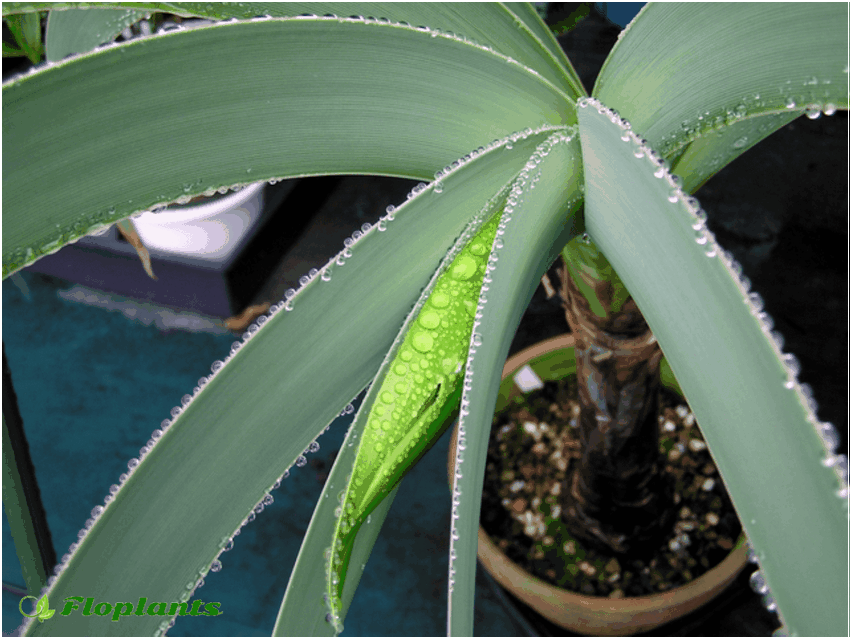
Worsleya belongs to the Amaryllidaceae family. This plant is quite rare in homes, and the genus itself consists of only one species, Worsleya nobilis.
This plant is native to the tropical regions of eastern Brazil. In the wild, Worsleya is found exclusively on sunlit mountain slopes, as well as on rocky soil near waterfalls.
Description of Worsleya
Like all other members of the Amaryllidaceae family, Worsleya has a fairly large bulb. The plant, including the flower, can reach several meters in height in the wild. The leaves are green in color, and their length is approximately ninety centimeters.
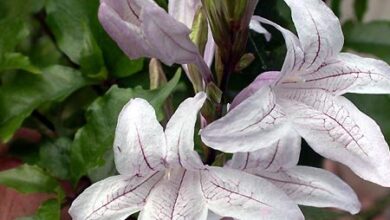
Worsleya is particularly decorative: its flowers range in color from light blue to a rich dark blue. The flowers measure approximately fifteen centimeters in diameter. A single peduncle of the sagebrush can produce up to fifteen flowers.
Indoors, this plant blooms in the summer, but in the wild, it can bloom virtually at any time.

Indeed, thanks to its beautiful blooms, this plant is especially popular with gardeners. However, sagebrush is considered a very demanding plant to grow indoors. It’s also worth noting that this plant is quite expensive.
Care and Growing of the Sagebrush
Sagebrush requires specific growing conditions: it requires nutritious, rocky soil, as well as plenty of sun and consistent moisture. It is considered best kept in a conservatory, but indoor cultivation on a south-facing window is also acceptable.
So, if you plan to grow sagebrush indoors, you’ll need to create specific conditions for this plant: excellent lighting, high humidity, a nutrient-rich medium, and regular watering. Good drainage is also necessary, which will create the appearance of rocky slopes, where this plant lives in the wild.
As for the temperature regime, it should be taken into account that the homeland of Vorsleya is characterized by moderate temperatures, and at night there is relative coolness. This plant tolerates especially hot temperatures extremely poorly. It will also be important to provide cool temperatures for the vorsleya at night. In summer, it is recommended to move the plant to fresh air. It is noteworthy that the plant is able to survive short-term drops in temperature even to minus two degrees.
As already mentioned, high air humidity plays a huge role for vorsleya.
Watering will be required regularly: about once a day. When the plant has a dormant period, it is recommended to reduce watering, but the soil should never be allowed to dry out.
Worsley will need regular feeding, because the soil does not contain a sufficient number of nutrients. It is acceptable to fertilize with each watering in moderate doses, as well as daily fertilizing with complex fertilizer in its usual concentration.
It should be remembered that adult plants may require replanting very rarely. The pot for vorsleya should not be very large, but it should be larger in size than its bulb. Reproduction of this plant, like other representatives of this family, occurs with the help of seeds, dividing the bulb and children.
In winter, the plant will require extremely moderate watering and coolness. However, the concept of a dormant period for vorsleya will directly depend on the conditions under which this plant is kept.