coconut tree
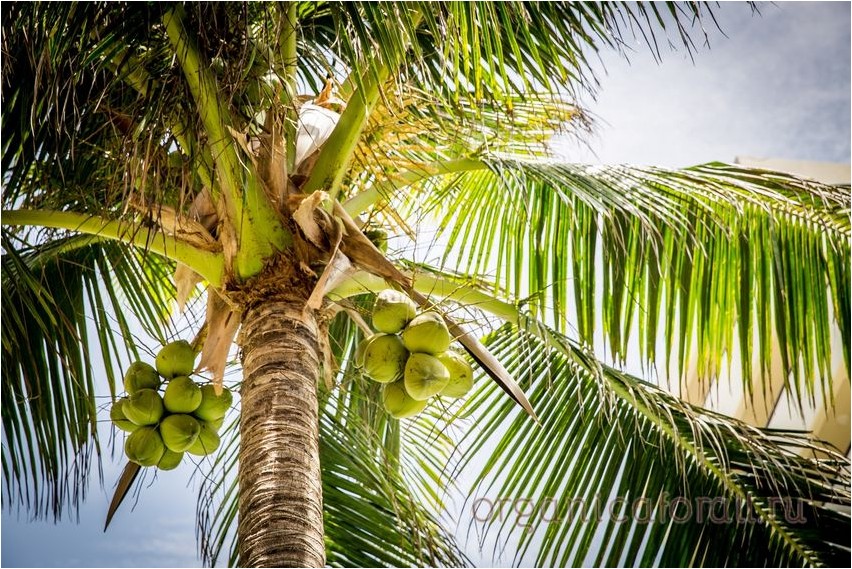
The coconut palm is also known as the coco nucifera. In Latin, the name of this plant will be as follows: Cocos nucifera.
The coconut palm is one of the plants of the family called arecaceae or palms; in Latin the name of this family will sound like this: Arecaceae or Palmae.
Description of coconut tree
It should be noted that the coconut palm can hardly be called a particularly demanding plant to care for. However, in order for this plant to develop favorably, certain cultivation characteristics will be required. The light regime should be sunny, but watering should be maintained abundantly throughout the summer season, while the air humidity should also remain high. The life form of the coconut palm is an evergreen tree.
This plant is recommended for growing in fairly spacious winter gardens, and sometimes it can also be found indoors. However, when a coconut tree grows at home, it is only in the form of an exotic plant, because it is too large. As for the maximum size in cultivation, the coconut palm can reach a height of about five to six meters.
Description of the features of care and cultivation of coconut palm
For the favorable development of this plant, replanting will be required, and young plants must be replanted every year. As for adult plants, they should be replanted once every few years. At the same time, for replanting it is always necessary to choose either floor tubs, flowerpots, or larger pots. It is important to remember that when transplanting small seedlings, special care should be taken and in no case should the long root be damaged, otherwise the coconut tree may even die. As for the composition of the soil mixture itself, you will need to mix two parts of leaf soil and turf soil, as well as one part of sand. The acidity of such soil can be either neutral or slightly acidic.
It should be noted that when the air humidity is quite low, the leaves of the coconut palm may begin to turn brown. If the lighting is insufficient, then these plants will die very quickly. In some cases, this plant can be damaged by scale insects, thrips and even spider mites.

Throughout the entire coconut palm period, it is important to ensure that the optimal temperature is maintained at a level of eighteen to twenty-two degrees Celsius. As for the degree of watering, it should be moderate, while the air humidity can remain standard. It is important to remember that when a coconut palm grows indoors, this period of dormancy is forced and its occurrence should be associated with insufficient light and air humidity. The dormant period of the coconut palm begins in October and continues until February.
Coconut palm propagation occurs by sowing seeds, which are nuts. Such nuts will germinate within about six months if they are kept in moist peat, and the temperature of the substrate should be about twenty-five degrees Celsius.
The specific requirements of this crop include the need for regular washing and spraying of leaves. Throughout the summer period, the plant should be provided with abundant watering. The coconut tree will need additional lighting all year round; this should not be forgotten in any case. In addition, the earthen ball should always remain moist, and the air humidity should not fall below seventy percent.