Fluffy oak
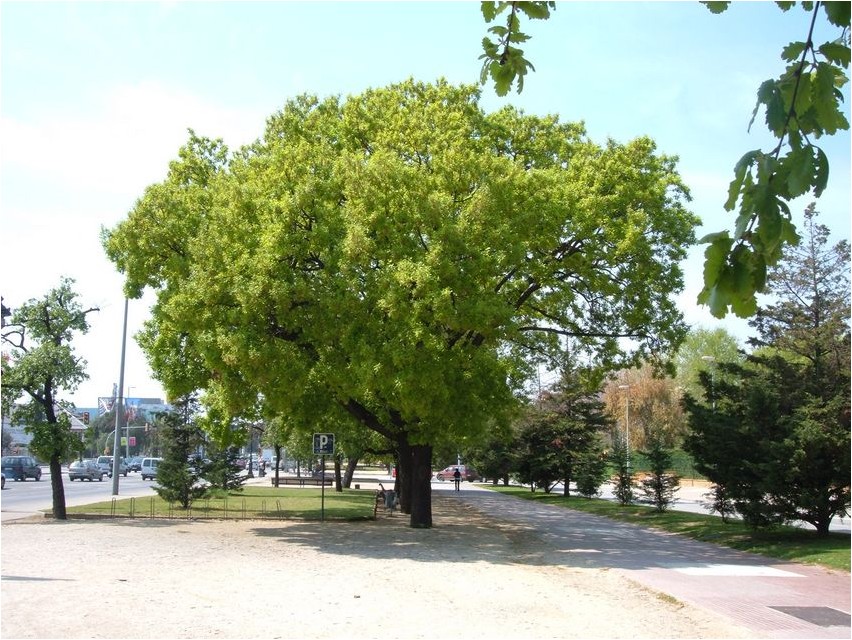
Downy oak is one of the plants of the family called beech; in Latin the name of this plant will be as follows: Quercus pubescens Willd.
As for the Latin name of the beech family itself, in Latin it will be: Fagaceae Dumort.
Description of downy oak
Downy oak is a small tree whose height reaches up to ten centimeters. In addition, downy oak can also be a shrub. This plant is most often endowed with a gnarled and uneven trunk, the shoots are painted in gray tones, which is associated with very thick felt pubescence. The length of the buds of the downy oak does not exceed half a centimeter; they are painted in light brown tones and are endowed with densely pubescent scales. The ends of the shoots of downy oak are painted in reddish tones; as for the shape and size of the leaves, these indicators may vary. The length can be from four to seven to ten centimeters, and the width will be approximately two to six centimeters. The base of the leaves will be either slightly wedge-shaped or weakly heart-shaped. The leaves of this plant have a short, blunt apical lobe, and there can be up to seven pairs of lobes. The length of the anther inflorescences will be about three to four centimeters; such inflorescences are endowed with a heavily pubescent stem. The fruits will be sessile or they will be on a very short stalk.
Downy oak blooms from April to May. Under natural conditions, this plant can be found in the southwest of Ukraine, Crimea, Moldova and the Caucasus. For growth, the plant prefers dry rocky and limestone places up to an altitude of about five hundred meters above sea level. Downy oak will form small oak forests with other species.
Description of the medicinal properties of downy oak
Downy oak is endowed with quite valuable healing properties, and it is recommended to use leaves, bark of young branches and thin trunks for medicinal purposes. The presence of such valuable healing properties is explained by the content of carbohydrates, acids and tannins in the leaves of the plant. Downy oak bark, in turn, contains steroids, tannins, pantothenic acid and vitamins of various groups.
The bark and leaves of this plant are endowed with anti-inflammatory, bacteriostatic, astringent and protistocidal effects.

For diseases of the liver, spleen, stomach ulcers, blood in the urine, frequent urge to urinate, hemorrhoidal bleeding, chronic enterocolitis and colitis, it is recommended to use a fairly effective remedy based on downy oak. To prepare such a remedy, you will need to take ten grams of bark per glass of boiling water, the resulting mixture is left to infuse for two hours, and then filtered thoroughly. Take this remedy one to two tablespoons three to four times a day.
In addition, for these same diseases, it is recommended to use one more remedy: to prepare it you will need to take one dessert spoon of the bark of young branches of downy oak in two glasses of cold boiled water. The resulting mixture should be infused for six to eight hours and then filtered thoroughly. This remedy is taken one third of a glass four times a day before meals.
For rinsing the mouth and throat, as well as for lotions and washing wounds, it is recommended to use the following product based on downy oak: to prepare it, take one tablespoon of bark per glass of boiling water. This mixture is infused for three to four hours, and then carefully filtered, after which the mixture is completely ready for use.





