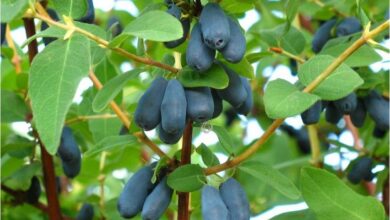
Fenugreek blue
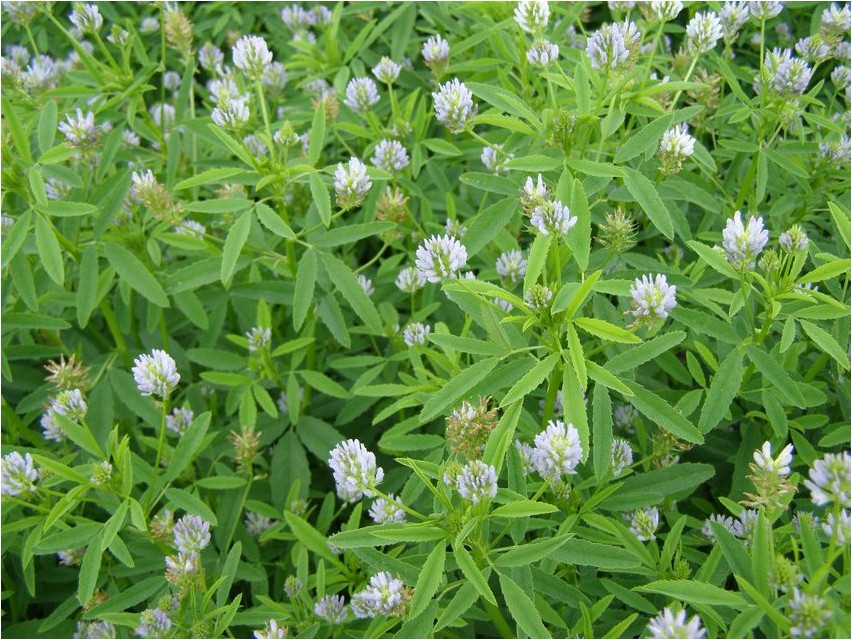
Blue fenugreek is one of the plants of the family called legumes; in Latin the name of this plant would be as follows: Trigonella caeruleum (L.) Ser.
As for the name of the blue fenugreek family itself, in Latin it will be: Fabaceae Lindl. (Leguminosae Juss.).
Description of blue fenugreek
Blue fenugreek is an annual herbaceous plant whose height will exceed even one meter. The stems of this plant are straight and they are endowed with densely erect branches. The leaves of blue fenugreek are ovoid in shape, their length will be two to five centimeters, while the width will be about one to two centimeters. The inflorescence stalk of this plant turns out to be somewhat longer than the leaves, and the inflorescence turns out to be spherical, capitate and dense. After flowering, such an inflorescence of this plant will not become loose and will not stretch out. The calyx of blue fenugreek turns out to be half as long as the corolla, and the length of the corolla will be approximately five and a half to six and a half millimeters. The length of the bob is four and a half millimeters, and the blue flag is notched and oblong.
Blue fenugreek blooms from June to July. Under natural conditions, this plant is found in Ukraine, the Caucasus, Crimea, the Far East, the European part of Russia and Moldova. As for the general distribution, this plant can be found in the Balkan-Asia Minor region, the Mediterranean and Central Europe. For growth, this plant prefers garbage places, places near roads, bushes and fields. It is noteworthy that this plant is not only an insecticide, but is also a very valuable honey plant.
Description of the medicinal properties of blue fenugreek
Blue fenugreek is endowed with very valuable healing properties, and it is recommended to use the grass and seeds of this plant for medicinal purposes. The concept of grass includes the leaves, stems and flowers of this plant. The presence of such valuable healing properties is recommended to be explained by the content of blue fenugreek with amino acids and steroid saponins.
As for traditional medicine, here this plant is quite widespread. In folk medicine, blue fenugreek is recommended for use for ascites, eye diseases and gout, and also as an analgesic, diuretic and antitumor agent. In cheese making, the herb of this plant is used as a flavoring agent.

A decoction prepared from blue fenugreek seeds should be used as a very effective lactogenic agent, while such a decoction is used in veterinary medicine for foot and mouth disease. It should be noted that blue fenugreek seeds are also used in baking.
For gout, it is recommended to use a very effective remedy based on this plant: to prepare such a healing remedy, you will need to take two tablespoons of crushed dry blue fenugreek herb per glass of water. The resulting healing mixture should be boiled for about three to four minutes, and then this mixture is left to infuse for about two hours, after which this medicinal mixture should be filtered very carefully. Take the resulting medicinal product based on this plant three times a day, one-third or one-fourth of a glass for gout, and also as an antitumor agent. In addition, this remedy based on blue fenugreek can be used for ascites as a diuretic.