Strawberry
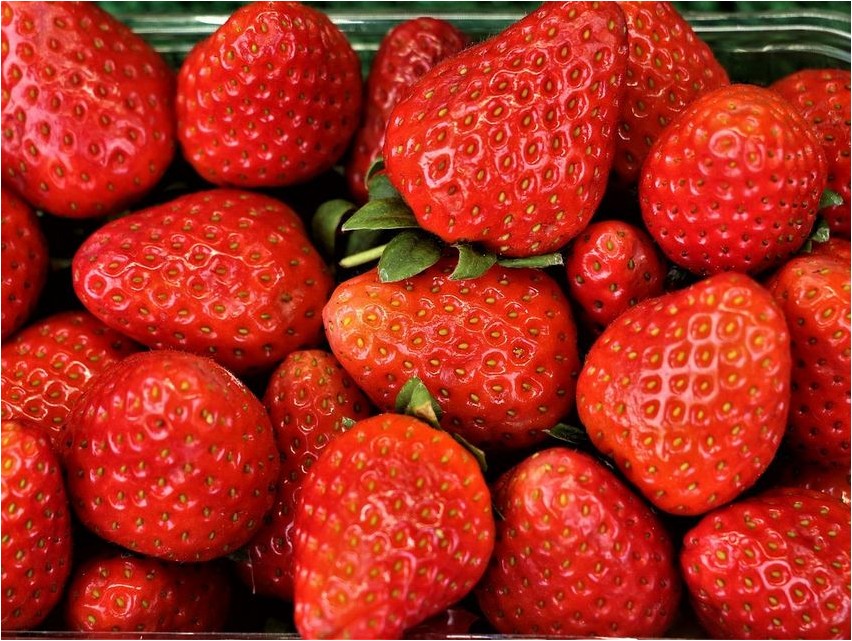
Strawberry (Fragaria moschata) is a popular berry, a perennial herbaceous plant in the Rosaceae family.
Crop Characteristics
Strawberry is the most common berry crop. The plants are highly flexible, adaptable to various weather conditions, ripen quickly, and produce high yields. The plant can reach a height of 15-35 cm. The strawberry stem is short, pubescent, and erect, with lateral branches called horns. The number of horns increases annually, and their tips end in fruit buds that form a peduncle.
Strawberry leaves are large, trifoliate, green, and grow on long petioles. Unlike other fruit crops, strawberries do not shed their leaves. The inflorescences are corymbose, consisting of 5-10 flowers growing on pubescent pedicels. The flowers are five-petaled and white. The berries are bright red, sometimes pinkish, conical in shape, and have a sweet taste and pleasant aroma. The root system is fibrous, consisting of two tiers: the upper tier consists of adventitious roots extending from the stem; the lower tier consists of roots extending from the rhizome.
Growing Conditions
Strawberries are a heat- and light-loving plant. Shaded areas are not suitable for growing strawberries. Strawberry beds should be located away from strong winds. The plant does not tolerate tomatoes, potatoes, eggplants, and peppers, but thrives with sunflowers and corn. Planting density is also important for strawberries; each plant should receive adequate sun. Dense plantings will result in small berries. Growing strawberries in the same location for a long period is not recommended, as this can negatively impact soil fertility and increase the risk of spreading various diseases. Growing Strawberries

To ensure a good strawberry harvest, experienced gardeners recommend purchasing only high-quality, pre-treated, and sorted seedlings. Their root system should be well-developed: the root shoots should be at least 8-9 cm long, and the root collar diameter should be approximately 6-7 mm. It”s best to choose elite strawberry varieties or first-generation varieties.
It is recommended to plant prepared seedlings in mid-July on a cool or cloudy day; this approach will allow strawberries to quickly adapt to a new place. It is not recommended to plant the crop in areas where plants of the Solanaceae family were previously grown. The best predecessors of strawberries are legumes, cruciferous vegetables and grains.
Before planting, carefully dig up the soil, remove weeds, apply mineral fertilizers that do not contain chlorine, and dig holes 15 cm deep. Strawberry seedlings cannot be placed deep, since the plant will not be able to actively develop and will die as a result. The seedlings are planted in rows at a distance of 20-25 cm from each other, there should be about 60-70 cm between the rows. After placing the strawberry bushes in the hole, they are watered abundantly, covered with soil and compacted. It is advisable to mulch the beds with strawberries with hay or sawdust.
Strawberry care
Strawberries require regular watering, especially in hot weather. During flowering, watering should be reduced. In order to retain moisture, you can add pine or spruce needles under the plants, which will also serve as mulch. The crop needs timely fertilizing with mineral and organic fertilizers; it is best to use manure diluted in water. No less important conditions for growing strawberries are weeding the ridges, as well as removing shoots and tendrils. Every week it is necessary to check plants for the presence of pests and diseases, and constantly carry out preventive treatments with horse sorrel infusion.
Kuznetsky Squad — Strawberry (feat. Prombl, Fedorer) (prod. by Presco Lucci)