Pitaya
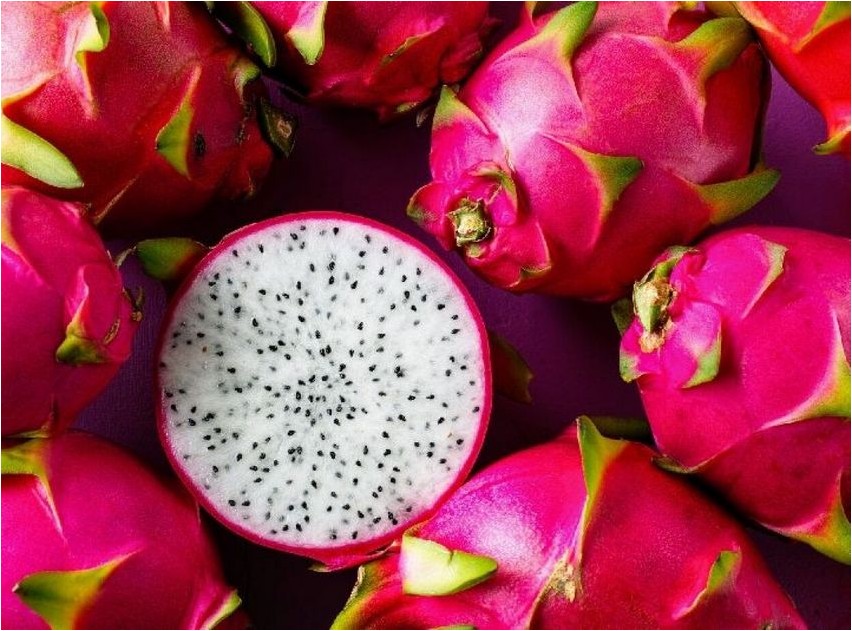
Pitaya (lat. Hylocereus) is the common name for the fruits of very original cacti of several species. Quite often there are such names for these fruits as pitahaya or “dragon fruit”.
History
America is considered to be the birthplace of pitaya, and the first mention of this bizarre fruit dates back to 1553 — the very first description of the beautiful pitaya was given in the book of Cies de Leon called “Chronicle of Peru”. Pitaya was very popular among the Indians, because collecting these fruits was not difficult, and there was no need to cook them.
And eastern legends tell us that the appearance of these unusual fruits was the result of battles with dragons — when the evil monsters could no longer spew fire, pitaya fell from their mouths.
Description
Pitaya is a liana-like epiphytic intricately climbing cacti with large and very fragrant white flowers opening at night.
The fruits on the trees begin to set not immediately after flowering, but after thirty to fifty days. Often there are up to five or six crop cycles in one year. The richest harvests of pitaya are harvested in Vietnam — up to thirty tons per hectare almost every year.
The weight of pitaya fruits can range from one hundred and fifty to six hundred grams, and other fruits can weigh even a kilogram. Inside each fruit you can see many tiny black seeds, and the outside of the fruit is colored yellowish or red. The flesh of red fruits is usually reddish or white. The taste of pitaya is somewhat reminiscent of the taste of the well-known kiwi, but the aroma of these fruits is still less intense, and when heated it is completely lost.

Where does it grow
Pitaya is very actively cultivated in South and Central America, as well as in Mexico. You can often find this culture in a number of countries in Southeast Asia (China, Japan (especially on the island of Okinawa), Malaysia, Sri Lanka, Taiwan, Indonesia, Thailand, Vietnam and the Philippines). In addition, pitaya is cultivated in Armenia, Northern Australia, Israel and the USA.
Application
The sweetish pulp of pitaya is most often consumed raw. Sometimes the taste of the fruit may seem a little bland, but this is only at first glance. It is best to eat this fruit slightly chilled, avoiding combinations with foods that have a strong aftertaste. By the way, pitaya fruits have a very low calorie content, which cannot but please people who are watching their weight.
Pitaya is also widely used to flavor various drinks. Moreover, it makes excellent wine and healthy juices. And the edible flowers of this crop are brewed with tea in many countries. Pitaya is perfectly absorbed by the body and provides invaluable benefits for stomach disorders. These fruits also have a beneficial effect on the endocrine and cardiovascular systems, and are also recommended for consumption by diabetics.
Immediately before consumption, each pitaya fruit should be cut vertically into two halves. Next, the resulting halves are again cut into small slices (like a melon) or the juicy pulp is scooped out with a spoon.
It is not advisable to eat pitaya seeds, but if you do get them, it is better to chew them, otherwise they will not be digested. And the skin of these fancy fruits is inedible and can contain a lot of pesticides.
Growing
Pitaya grows best in a fairly dry tropical climate with moderate rainfall. Precipitation in the form of rain or excess humidity can lead to early falling of flowers and gradual rotting of fruits. By the way, unripe fruits are often pecked by birds. Rotting pitaya stems is usually caused by the bacteria Xanthomonas campestris, and the appearance of brownish spots on the fruit is due to infection by Dothiorella fungi, although this happens extremely rarely.





