Leontice
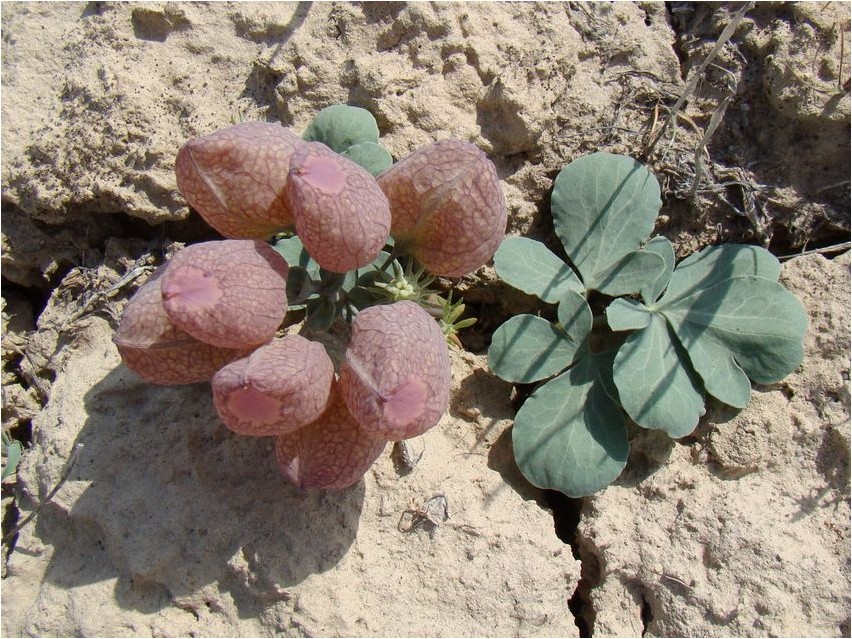
Leontice (lat. Leontice) is a beautifully flowering medicinal plant belonging to the Barberry family. From Greek, the name of this plant is translated as “lion” – this is due to the fact that the leaves of some varieties of leontice resemble the prints of a lion’s paws.
Description
Leontice, or leontitsa, is a tuberous early spring low-growing ephemeroid plant, endowed with triply dissected leaves and bright yellow flowers collected in racemose inflorescences. The height of this herbaceous perennial ranges from twenty centimeters to half a meter, and its spherical tubers always lie very deep in the soil.
The inflorescences of this plant look like few-flowered clusters of yellow color. Leontice usually blooms at the end of April or beginning of May, and the death of the above-ground parts of this plant begins in June. By the way, the flowers of leontice are very reminiscent of the flowers of barberry, and its swollen membranous boxes can be either open at the tops or non-opening.
In total, the genus Leontice has five to six species. And this plant was introduced into cultivation back in 1886.
Where does it grow
In nature, leontice can most often be found in the semi-deserts or steppes of East and Central Asia, Southeast Europe, as well as in China. It is quite possible to see this plant in the Balkans, as well as in the countries of the eastern Mediterranean and Turkey.
Usage
Most often, leontice is planted in gardens, on forest edges, in raised beds or in rock gardens. In addition, this plant is widely used as a medicinal plant – tubers collected at the end of February or beginning of March are used for this purpose. And the most suitable species for use for medicinal purposes are considered to be Eversman’s leontice and Smirnov’s leontice. The latter, by the way, is quite actively used for gastric ailments accompanied by decreased secretion of gastric juice. And in Georgian folk medicine, leontice Smirnova is also an excellent assistant in the treatment of tuberculosis.

Growing and care
Leontice is an extremely undemanding plant, and this characteristic allows it to be planted even in shady gardens (only Leontice albertii requires full sun). It is quite undemanding regarding soil (sandy loam is considered the best substrate for growing it), but excessive moisture can be detrimental. Generally, watering should be moderate—leontice tolerates drought much better than overwatering.
During the summer dormancy period, it is perfectly acceptable to dig leontice out of the soil and store it in a dry place. Some varieties of this plant boast impressive winter hardiness and can easily tolerate temperatures down t o-23 degrees Celsius.
To ensure excellent, healthy growth, this beautiful and useful plant should be fed with high-quality liquid fertilizers containing a low nitrogen content during the active growing season. Typically, such feeding is done once a month.
Leontice is most often propagated by seeds (for winter sowing) – immediately after ripening, they are either sown or stored in damp moss. Planted specimens germinate and begin to bloom only in the fourth to sixth year. Leontice is also sometimes propagated by tuber division – pre-prepared tubers are divided either in half or into three independent parts.





