Common Artemisia
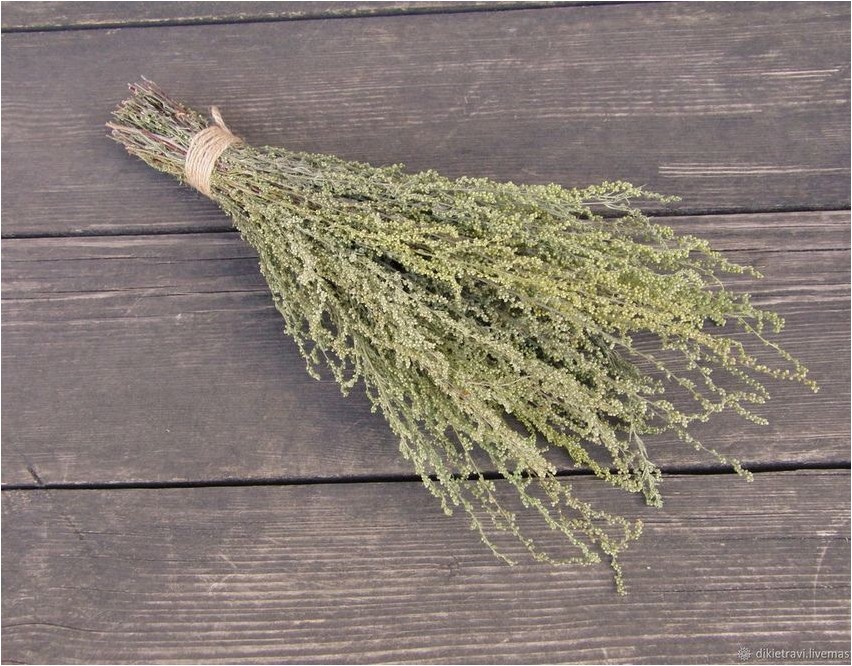
Cornwort is a member of the Asteraceae or Compositae family. Its Latin name is Artemisia campestis L. (A. dniproica Klok., A. marschalliana Spreng., A. sosnovskyi Krasch.).
The family name of Common Artemisia is Asteraceae Dumort. (Compositae Giseke).
Description of Common Artemisia
Cornwort, also known as plain artemisia, is a perennial herbaceous plant that grows to a height of approximately twenty centimeters. This plant has a vertical woody rootstock, which in turn develops vegetative shoots. The stem of Common Artemisia is straight and branched, with a brown or slightly reddish color. This stem lacks a rosette of leaves at the base. Like the rest of the plant, the stem is glabrous or may be covered with sparse, semi-appressed hairs. The leaves of the sterile shoots and the lower stem leaves of common wormwood are long-petiolate, approximately ten centimeters long. These leaves are bi- or tripinnately dissected into narrowly lanceolate lobes approximately three to ten millimeters long. The middle and upper stem leaves of this plant are sessile and most often pinnately dissected. Common wormwood inflorescences are spike-paniculate and bear numerous small anthodiums. These anthodiums are approximately one and a half to three millimeters long, directed upward, and ovate. The marginal flowers in common wormwood anthodiums are pistillate, bearing a narrowly tubular and bicuspid corolla. The central flowers, in turn, are staminate, with a conical, bare corolla and an underdeveloped pistil.
In the wild, this plant is found in Moldova, Belarus, Ukraine, the Caucasus, Central Asia, all regions of Western Siberia except the Ob River, and all regions of European Russia except the Dvina-Pechora and Karelo-Murmansk regions. Artemisia arvense prefers pine forests, steppe meadows, fields, gravelly slopes, and sandy river and sea shores.
Description of the medicinal properties of Artemisia arvense
Wormwood is endowed with very valuable healing properties, and it is recommended to use the fruits and herbs of this plant for medicinal purposes. The term grass includes flowers, stems and leaves. The presence of such valuable healing properties is recommended to be explained by the content of rubber, phenolcarboxylic acids and their derivatives, as well as essential oil, in the composition of this plant. The following polyacetylene compounds will be present in the roots of wormwood: dehydrofolcarinone, artemisia ketone.
As for traditional medicine, here this plant has become quite widespread: a decoction prepared from the herb wormwood is recommended for use for numerous gynecological diseases.

An infusion and decoction based on the herb of this plant is used for women’s diseases, gastralgia, diarrhea, cystitis, pulmonary tuberculosis, osteoalgia and as an anthelmintic. In addition, in the form of rinses, an infusion prepared from the herb wormwood is used for the oral cavity for toothache.
Fresh crushed herb of this plant is used topically for various purulent wounds, and in the form of a poultice this herb is used for tumors. In collections, wormwood herb can be used for peptic ulcers of the stomach and duodenum, as well as for acute and chronic gastritis. It should be noted that such tools are very effective when used correctly.





