Astragalus
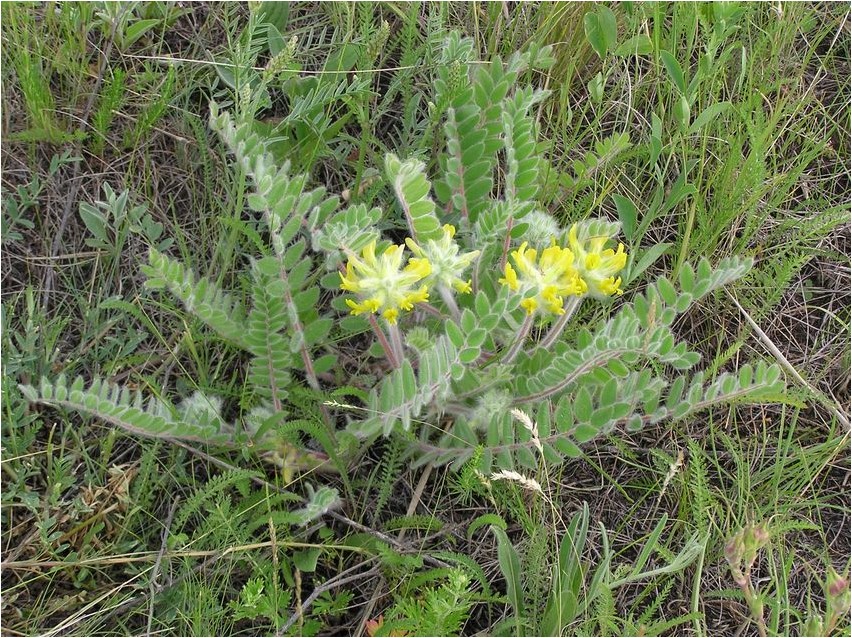
Astragalus (lat. Astragalus) is a large genus of various plants of the legume family (lat. Fabaceae). Among more than two and a half thousand representatives of the genus there are herbaceous plants, subshrubs and shrubs.
Some species have healing abilities. Interesting and bright inflorescences of Astragalus will decorate the garden. The simplest species of the genus are used by people as firewood.
What’s in your name
The Greek word underlying the genus name “Astragalus” dates back centuries. Another of the fathers of botany, the ancient Greek naturalist and physician, Pedanius Dioscorides, who lived in the 1st century AD, called the legume plant this way for the shape of its seeds, similar to a dice made from the ankles of a ram with the same name.
The name of the genus, which is widely represented in nature by plants of various appearances, simply could not produce many synonyms that would mislead not only ordinary gardeners, but also meticulous botanists.
Description
Numerous species of the genus Astragalus grow in the temperate climate of our entire small globe, including on the territory of our country. They are protected from climatic vagaries by dense pubescence.
Most often these are herbaceous perennials, less often – subshrubs, and even less often – shrubs. Plant stems can be well developed or very shortened, densely covered with pubescence.

Compound leaves are formed by simple or trifoliate oval-elongated leaflets, located on a common petiole in symmetrical pairs or at random. The complex leaf ends with a single leaf.
Spike-shaped or capitate inflorescences are formed by moth-type flowers with a yellow or purple corolla. The boat of the moth flower can be pointed or obtuse.
The fruit is a pod, typical for plants of the legume family, single or double-lobed, with small details that differ in different species, for example, the bean can be sessile or located on a short stalk.
Some species of the genus
* White-stemmed astragalus (lat. Astragalus albicaulis)
* Astragalus physocalyx (lat. Astragalus physocalyx)
* Astragalus piletocladus (lat. Astragalus piletocladus)
* Danish Astragalus (lat. Astragalus danicus)
* Astragalus chickpea (lat. Astragalus cicer)
* Astragalus fluffy-flowered (lat. Astragalus dasyanthus)
* Rolled astragalus (lat. Astragalus contortuplicatus)
* Crescent Astragalus (lat. Astragalus falcatus)
* Cold astragalus (lat. Astragalus frigidus)
* Astragalus calyx (lat. Astragalus calycinus)
* Astragalus sainfoin (lat. Astragalus onobrychis).
Usage
More than 200 species of the genus are gum bearers, that is, they secrete gum from wounds and cracks in the bark. Botanists suggest that by secreting gum, the plant protects its wounded tissues from the penetration of all kinds of pathogens into them, and also preserves its internal moisture reserves.
Since ancient times, man has learned to use the gum of plants of the genus Astragalus to his advantage. It is in demand by the pharmacology, textile and perfume industries, and confectionery production. Low grades of gum are used in the manufacture of pencils, watercolors, glue, matches and many other household items. Gum itself does not have medicinal properties, but serves as a binding agent in medicines, and acts as an adhesive in household items.
But among the plants of the Astragalus genus there are also those that have healing abilities. The most famous of them are the fluffy-flowered or woolly-flowered Astragalus (Latin: Astragalus dasyanthus) and the densely branched Astragalus (Latin: Astragalus piletocladus).
Dense decorative inflorescences of certain species of the genus Astragalus will decorate a country flower garden. The plant looks beautiful when planted as a separate compact bush. Low-growing species can be used to create a border for a garden path, requiring a minimum of time and effort to care for it.





