Celery
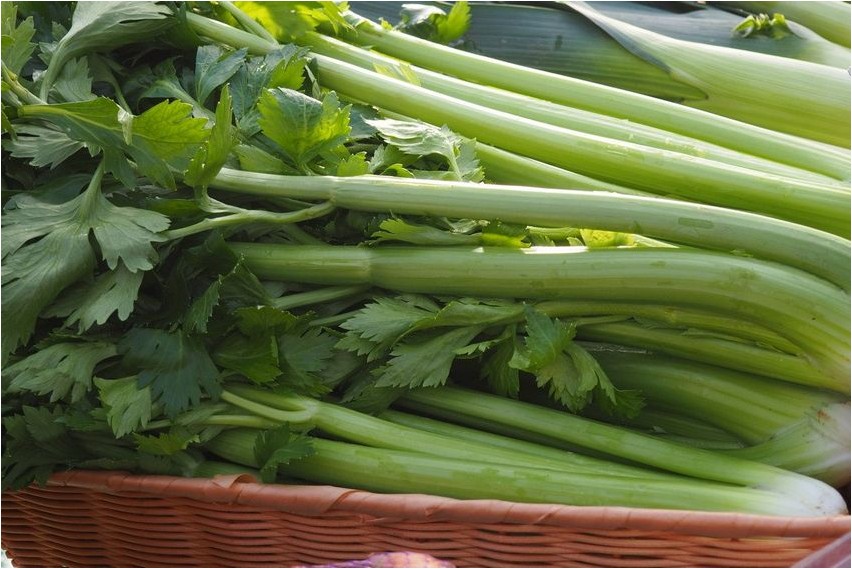
Celery (lat. Apium) is a biennial herbaceous plant of the Apiaceae, or Celery family.
Characteristics of the crop and common varieties
Celery is a vegetable plant that in the first year of cultivation produces a rosette of glossy dark green leaves, fleshy petioles and a root vegetable. In the second year, the plant develops an erect, grooved stem 30-100 cm high and an umbellate inflorescence that blooms in mid-July. The seeds ripen in the first ten days of August, after which the plant dies.
Celery leaves are large, pinnately dissected, dark green in color, shiny on the outside and matte on the inside. The flowers are white, small, collected in umbellate inflorescences. The fruits are round in shape, reach 1. 5-2. 5 mm in diameter, and can be brown or gray in color.
Celery is widespread in Italy, France and England; it is not yet particularly popular in Russia, although the crop is grown quite actively in the southern regions of the country. Wild forms of the plant grow along the shores of the Mediterranean Sea.
Proven varieties: early ripening — Delicatessen and Apple; mid-early — Kornev Gribovsky; petiole celery — White Feather, Golden Path, Utah, Pascal and Golden Feather; root celery — Magdeburg, Apia and Frigga.

Growing conditions
Celery is a cold-resistant plant, seeds germinate even at a temperature of 5C, but the optimal temperature for development and growth is 18-22C. The culture responds positively to moderately moist, fertile and loose soils with a pH of 5. 5-6. 5, with a deep arable layer. Prefers well-lit areas. Acidic soils are not suitable for growing celery; they are first limed with wood ash or lime. The best crop predecessors are potatoes, zucchini, tomatoes, cauliflower and white cabbage and cucumbers.
Landing
The beds for growing celery are prepared in the fall, the soil is dug to a depth of 27-30 cm, humus, compost or manure, superphosphate and potassium salt are added. In the spring, soil treatment is repeated and fed with ammonium nitrate; it is advisable to enrich the area with magnesium, calcium and boron; these elements prevent the appearance of chlorosis of the leaves.
Most often, celery is planted as seedlings. The thing is that the seeds of the plant do not germinate well due to the essential oils they contain. If sowing is carried out in open ground, then the seeds are soaked in damp gauze for several days before hatching.
The seedling method of growing celery is the most effective; moreover, it allows you to get an early harvest. Sowing seeds for seedlings is carried out two months before the intended planting in open ground. To do this, they are sown in wooden boxes filled with soil substrate. A distance of 5-6 cm is left between the rads, the embedding depth is 0. 5 cm.
The crops are sprayed with a spray bottle, covered with film and placed in a warm place until the entrances appear. It is important to ensure that the soil in the boxes does not dry out, as this will have an extremely negative impact on future seedlings. Severe waterlogging can completely destroy crops. The entrances that appear are covered with 0. 5 cm of soil substrate. Seedlings are picked after about 4-5 weeks. Seedlings are planted in open ground when the plants reach two months of age; young plants are shaded for 2-3 days. Preferably immediately after planting, the ridges are mulched with sawdust, peat or fallen leaves.
Care
Caring for celery consists of regular watering, weeding, loosening and fertilizing. A week after transplantation, celery is fed with superphosphate, ammonium nitrate and potassium chloride, and the feeding is repeated after another two weeks.
Varieties of petiole celery, in addition to the above agrotechnical measures, require high hilling. This procedure helps to whiten the petioles, get rid of bitterness and pungent odor. The lateral roots of root celery are cut off in mid-summer; this technique will allow the formation of the largest possible fruit.
Harvest
During the entire gardening season, 2-3 crops of greenery are harvested. Harvesting begins at the end of July, the next cutting is carried out approximately 40-45 days later. The cutting is done high, the remaining above-ground part should be at least 6-7 cm. Harvesting of petiole and root celery is carried out in late September — early October.





