Longan
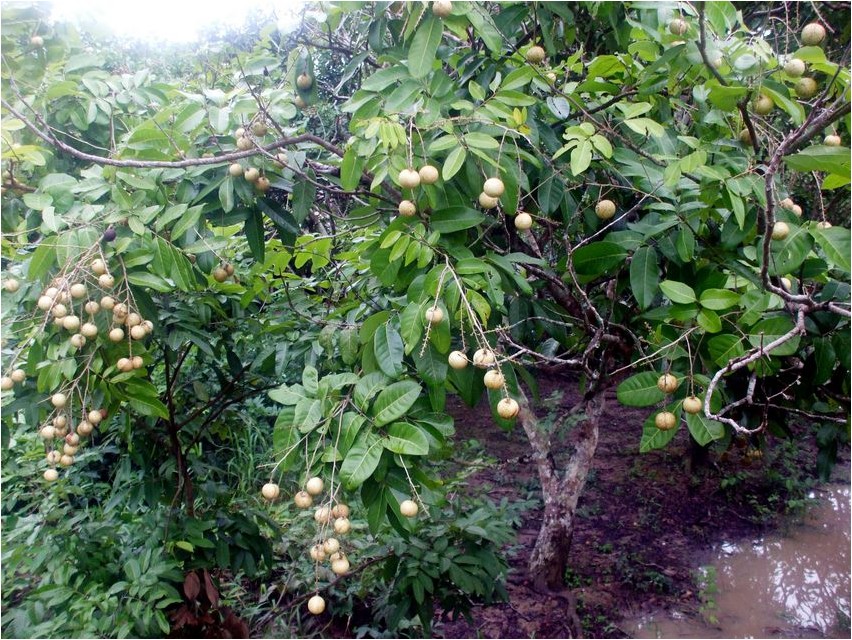
Fruit and Berry Crops. Longan (Latin: Dimocarpus longan) is a fruit crop; an evergreen tree in the Sapindaceae family. It is also known as dragon’s eye.
Longan is grown in China, Vietnam, Thailand, Indonesia, and Taiwan. The plant gets its name from the Vietnamese province of Longan, where it is widely cultivated.
Crop Characteristics
Longan is an evergreen tree up to 10-12 m tall with a spreading crown, the width of which is sometimes equal to the height of the tree itself, and sometimes even greater. The flowers are collected in small, fluffy inflorescences, resembling lumps, which later develop into fruits up to 3-4 cm in diameter.
The fruit pulp is sweet, juicy, and very aromatic. The skin is dense, without cracks, and can be yellow, mustard, or even reddish in color. The fruit contains only one seed, usually black or burgundy. The plant’s closest relative is the Chinese lychee, which is very similar in appearance.
Growing Intricacies
Little is known about the propagation and cultivation of this plant, as it isn’t particularly popular in Russia or other countries and is most often grown indoors. Longan seeds are difficult to obtain, but if the opportunity arises, it’s worth trying your luck and growing this exotic plant, which will delight its owner with tasty and juicy fruits in 3-7 years.
Planting the seed is done immediately after removing it from the fruit. This is a prerequisite for successful cultivation, as the seeds lose their viability within a few hours. Soil plays an equally important role; the plant prefers light, peaty, and well-drained soils. Under optimal conditions, seedlings appear in 7-9 days.

Regular watering is recommended, but avoiding overwatering is recommended. Even short-term soil drying out can be detrimental to plant development, causing longans to shed their leaves and die. The room temperature should be kept at least 25-26°C (77-80°F). The plant can be propagated by cuttings.
Care
Longans require regular pruning to shape them, otherwise they will overgrow and develop a less-than-perfect crown. They also require protection from pests. They are often attacked by various types of scale insects, spider mites, and mealybugs.