Thyme
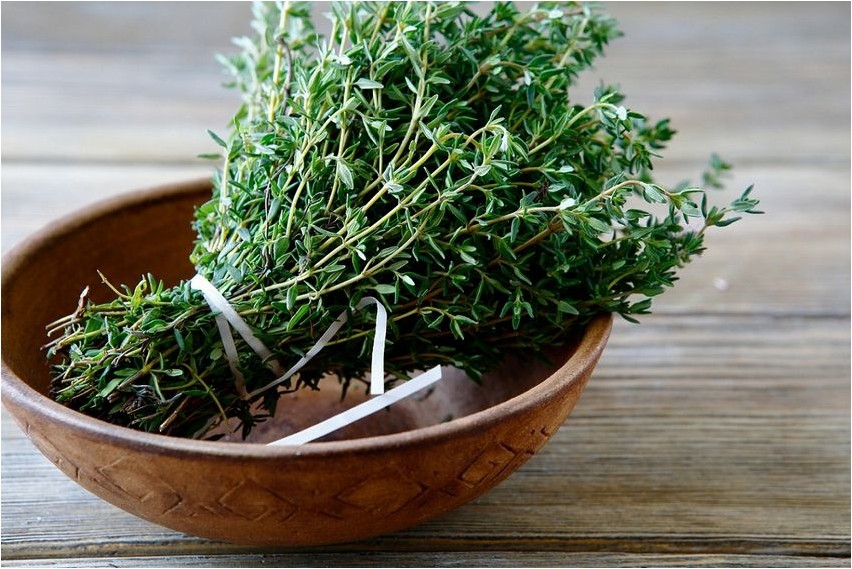
Thyme (lat. Thymus) is a light-loving, drought-resistant perennial from the Lamiaceae family. Its other name is thyme.
Description
Thyme is a very spectacular spicy-aromatic subshrub, endowed with creeping or ascending woody stems, as well as herbaceous flowering shoots. As a rule, the height of this plant almost never exceeds thirty-five centimeters. The roots of thyme are taprooted and woody, and its leaves are always quite small, but at the same time very dense and solid.
Thyme flowers are collected at the tips of branches into elongated or capitate inflorescences. And the fruits of this plant have the form of boxes that contain four black-brown nuts – either almost spherical or ellipsoidal. Thyme usually blooms from June to August, and its fruits usually ripen in August and September.
Where does it grow
It is not difficult to find thyme throughout almost all of Eurasia, as well as in Greenland and the vast expanses of North Africa. And on the territory of Russia and its neighboring states, more than one hundred and seventy different types of thyme grow! This unpretentious plant can be seen growing in forests, steppes, and even on rocky slopes!
Usage
Thyme is not only a well-known medicinal plant. It is used no less often in garden design! Thyme will look especially great in rock gardens, where it can be very successfully combined with various perennials that can form taller and looser clumps (for example, with arabis, creeping phlox or lily).
In folk medicine, mainly dried leaves and flowers of thyme are used. This plant is especially good at helping to cope with a wide variety of respiratory diseases. Its powerful antiseptic properties are also highly valued. Also, among other things, thyme is also an excellent essential oil plant (it is even used in the manufacture of various perfumes!), and, of course, an excellent honey plant. It is also used in cooking – thyme has long been considered one of the most popular seasonings! And, it should be noted, it can be safely added to almost any dish! And once upon a time, thyme was also used as one of the components for incense during worship! In a word, this is the most universal plant that can be successfully used in a wide variety of areas of life!

Growing and care
Thyme is a drought-resistant and light-loving crop. This plant will feel best on medium-fertile soils characterized by either a slightly alkaline or neutral reaction. In addition, ideally the soil should also be well drained. Good garden soils are especially suitable for growing thyme. And on moist soils enriched with organic matter, thyme dies quite quickly.
Thyme is watered only as needed, and after it blooms, all shoots should be cut off by about 1/3 – this approach allows you to increase the branching of shoots in the future, which in turn will ensure more luxuriant flowering next year. By the way, this plant grows magnificently in the same place for three or four years in a row!
Thyme is propagated by seeds – they are sown either before winter or with the onset of spring. And the seedlings will delight you with their first flowering only in the second or even third year. It is also quite acceptable to propagate thyme in the fall by dividing the bushes or by cuttings in the spring. At the same time, from twelve to eighteen plants can be planted on one square meter of area.





