Prince
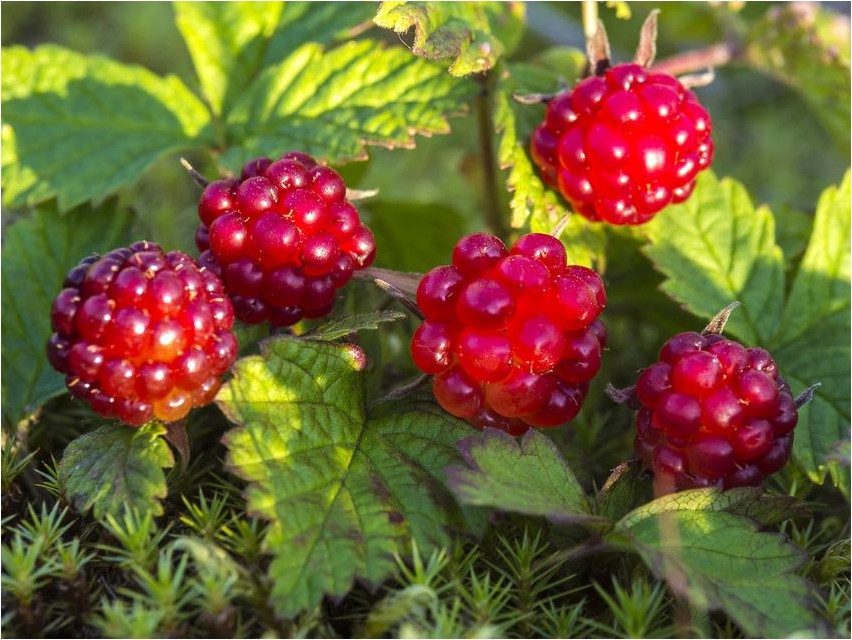
Knyazhenika (lat. Rubus arcticus) is a genus of herbaceous plants or subshrubs of the Rosaceae family. The plant is known under the names polyanina, drupe, polyanica, mamura, khokhlushka, poludenitsa.
Distribution
Under natural conditions, princeling is found in the temperate zone of the Northern Hemisphere. Typical habitats include mixed-grass meadows, forests, stream and river banks, bush thickets, swamps and tundra. In Russia, princely plant is grown in the Urals, Siberia, the Caucasus and the Far East.
Today, as a result of merciless deforestation, the princeling is gradually disappearing from its natural range. But agronomists do not sit still, and introduce the princess into cultivation as a valuable ornamental and winter-hardy plant with healing and tasty fruits. And not in vain, because for hundreds of years, knyazhenika has been valued by people for its unique aroma and taste, reminiscent of both pineapple and raspberry. Surprisingly, the price of princely berries was on par with sable skins.
Characteristics of culture
Knyazhenika is a perennial herbaceous plant or subshrub up to 30 cm high. The roots of Knyazhenika are thin, creeping, cord-like, the bulk of the roots lie at a depth of 10-15 cm from the soil surface. The leaves are green, wrinkled, trifoliate, petiolate, equipped with two stipules. The flowers are solitary, bisexual, apical, five-petaled, up to 2 cm in diameter. Unisexual flowers are less common.
The fruit is a juicy multi-drupe, consists of 25-50 fruitlets, can be cherry or purple in color with a bluish coating. On average, the weight of one fruit is 1-2 g. Every year the above-ground part of the plants dies, and in the spring new shoots form from the buds. The princely plant blooms at the end of May, flowering lasts up to 35 days. On one bush you can find both berries and flowers.
Growing conditions
The preferred soil for growing princelings is sandy and loose peat, fertile, moderately moist with a pH of 3. 2-6. 2. Knyazhenika is a shade-loving culture, has a negative attitude towards intensely lit areas, and develops best in semi-shaded areas, as well as near the walls of houses, outbuildings and under the canopy of trees.

Reproduction and planting
Cloudberry is propagated by seeds, division, root suckers, and cuttings. Seeds are sown immediately after harvesting, as they do not store well. Seeds collected the previous year have a low germination rate—5 to 7%. Sow the crop in moist soil. Immediately after sowing, mulch the beds with a thick layer of peat or humus. It is also possible to sow cloudberry in seedling boxes, which are subsequently placed under snow cover.
The easiest method of propagation is division. Perennial bushes with about 200 shoots are divided into sections, each with its own roots and shoots. Plant the divisions with a root ball, 25-30 cm apart, with a row spacing of 80-100 cm. This procedure is best carried out in late April — early May, or in September.
Root cuttings are an effective method of propagation. Cuttings are taken from the roots, approximately 9-10 cm long. Each cutting should have at least five buds. The cuttings are planted at a depth of 4-5 cm. The following spring, new shoots form from the buds, the number of which increases each year. A full harvest of berries can be obtained with this propagation method in the third year.
Prepare the plot for the plant in advance: dig the soil to a full spade depth, add rotted manure or humus, sifted river sand, peat, superphosphate, potassium salt, and wood ash. It is important to remove all rhizomatous weeds during digging, otherwise they will prevent the cloudberry from developing properly. Form beds 100-110 cm wide. Before planting, treat the soil with a weak solution of potassium permanganate. Care
Rainbow berry care involves weeding, fertilizing, watering, and loosening the space between rows. Fertilize once a year in early spring, using either mineral or organic fertilizers, but liquid is best. Water regularly, but avoid overwatering. Weeding is especially important during the early stages of cloudberry development.
Rainbow berry. Description of the berry. Where does it grow? How and where can I buy seedlings of this delicious berry without being ripped off?





