Foxglove rusty
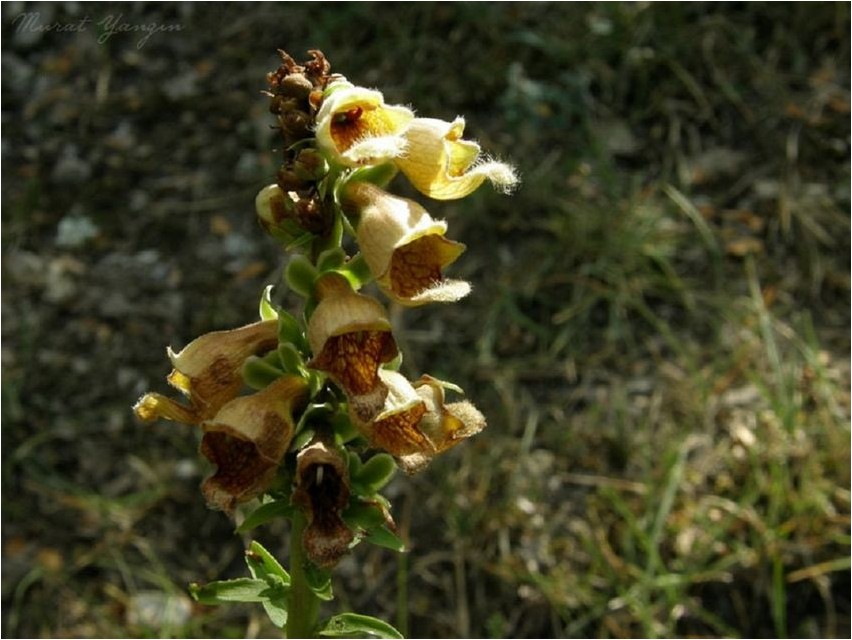
Foxglove rusty is one of the plants of the family called Noricaceae; in Latin the name of this plant will be as follows: Digitalis ferruginea L.
As for the name of the rusty foxglove family itself, in Latin it will be: Scrophulariaceae Juss.
Description of foxglove rusty
Foxglove rusty is a perennial herbaceous plant, the height of which will fluctuate between forty and seventy centimeters. Such a plant will be endowed with a rather short and woody rhizome. The stems of foxglove rusty will be straight, in the lower part they are sparsely hairy, while in the upper part they will be bare. The leaves of this plant are oblong-lanceolate, their length is seven to fifteen centimeters, and their width is about one to two and a half centimeters. The basal and lower stem leaves of this plant at the very base will be elongated into a petiole, and below they will be endowed with pronounced pubescent and arched veins. The middle and upper stem leaves of foxglove rusty will be glabrous and sessile, they also gradually turn into bracts. The flowers of this plant are painted in yellow-brown tones, they will be bell-shaped in shape, and are also collected in a multi-flowered dense raceme. The fruit of foxglove rusty is an ovoid bare capsule, the length of which does not exceed one centimeter. This fruit is endowed with numerous seeds, colored yellow-brown.
Under natural conditions, this plant grows in the territory of Eastern and Southern Transcaucasia. To grow, this plant prefers forest clearings, thickets, places among oak forests and shrubs, edges of beech, fir, pine, mountain and spruce forests, and also selects calcareous and humus-rich soils.
Description of the medicinal properties of foxglove rusty
Foxglove rusty is endowed with very valuable healing properties, and for medicinal purposes it is recommended to use the basal rosette leaves of both the first and second years of development, as well as the stem leaves of this plant.
The plant’s valuable medicinal properties are explained by its cardenolide content, while the aerial parts contain flavonoids, phenolic acids, and iridoids, which are derivatives of catalpol. The stems, in turn, contain flavonoids and phenolic acids. The leaves of this plant contain flavonoids, cardenolides, nitrogen-containing compounds, anthraquinones, and phenolic acids.

This plant is widely used in folk medicine. An infusion made from foxglove leaves is recommended for heart failure, pneumonia, and ascites. As an ointment, this infusion is used for scabies and tumors. An infusion made from the roots of this plant is indicated for anthrax. Preparations based on this plant are recommended for cardiac conditions accompanied by severe atherosclerosis and cardiac muscle degeneration, and are also used for acute infectious diseases.
For ascites, a remedy is recommended: approximately one gram of foxglove leaves per two hundred milliliters of water. This foxglove-based remedy should be taken one teaspoon two to four times daily for ascites. For maximum effectiveness, both the preparation and administration instructions for this foxglove-based remedy should be followed.
Growing foxglove