Purslane
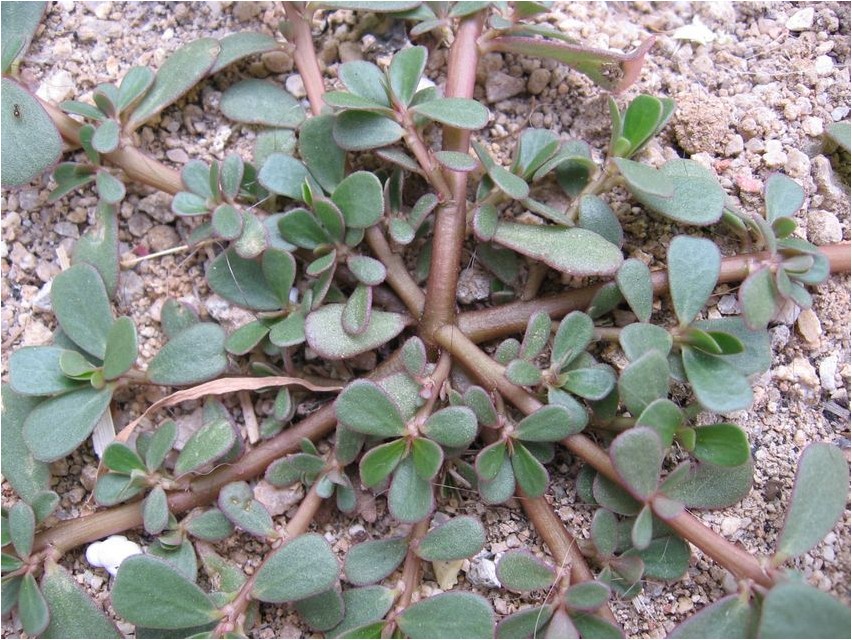
Purslane (lat. Portulaca) is a flower crop; annual or perennial plant of the Portulaca family. In nature, purslane grows on sandbanks, along river banks, in weedy places and in fields.
The plant’s homeland is considered to be South and North America. Some types of purslane are cultivated in Russia and neighboring countries. Currently, more than 100 species are known.
Common types and their characteristics
* Large-flowered purslane (lat. Portulaca grandiflora) – the species is represented by perennial plants with creeping or erect light green or reddish-green stems, pubescent over the entire surface. Large-flowered purslane is cultivated as an annual plant, especially in the Ural climate. The leaves are juicy, fleshy, alternate, cylindrical in shape, up to 2 cm wide and up to 2. 5 cm long. The flowers are small, simple or double, 5-7 cm in diameter, and can be yellow, white, orange, pink, lilac or red. Sepals are brightly colored, fused at the base. The fruit is a multi-seeded capsule. Large-flowered purslane blooms from June to October. Flowers open only in sunny weather, with the exception of varieties “Sundance”, “Sunglo” and “Cloudbeater”. This species is popularly called a “mat”, and this is due to the fact that plants, spreading quickly, create bright and blooming “mats”.
*Purslane (lat. Portulaca oleracea) – the species is represented by cosmopolitan plants, with succulent, reddish, hollow, highly branched, elongated or creeping stems. The leaves are sessile, fleshy, oblong, spade-shaped, with truncated edges, 1. 5-3 cm long. The flowers are small, light yellow, solitary or collected in inflorescences of 2-5 pieces. The calyx is formed by two sepals. The corolla consists of 4-6 obovate petals, reaching 7-8 mm in diameter. Purslane blooms in June-August.
Growing conditions

Purslane prefers intensely lit areas. In the shade, plants develop slowly and practically do not bloom. The soils for growing purslane are preferably loose, moderately moist, poor, sandy with a neutral pH. On fertile soils, plants quickly grow voluminous and dense green mass to the detriment of flowering. Otherwise, purslane is unpretentious.
Reproduction and planting
Purslane is propagated by seeds, cuttings and dividing the bush. Most often the plant is grown through seedlings. Seeds are sown in seedling containers in March. The seeds are not buried, but evenly placed on the surface of the soil. Purslane seeds are quite small, so for more uniform sowing they are mixed with fine-grained sand.
Standard soil mixtures are not suitable for growing seedlings, as they contain peat, which interferes with germination. It is best to use a substrate consisting of garden soil and river sand. Before sowing, the soil is disinfected with a weak solution of potassium permanganate.
The crops are moistened, covered with glass or polyethylene and taken to a warm room with an air temperature of 22-24C. You can keep crops close to batteries. When 2-3 true leaves appear on the seedlings, the seedlings are planted in separate containers. Seedlings are planted in open ground in late May – early June.
Purslane is often propagated by cuttings. Healthy planting material is put away in a cool place for the winter, and in the spring cuttings 5-6 cm long are cut and planted in the ground until they take root. After which they are transplanted to a permanent place.
Care
Purslane needs regular and moderate watering, especially during drought. There should be no stagnation of water in the near-stem zone; the plant has an extremely negative attitude towards waterlogging. Purslane is one of those crops that does not like fertilizing and develops well without it. The crop is very rarely affected by diseases and pests. If fungal diseases are detected, plants are sprayed with any approved fungicidal preparations containing copper.
Application
Purslane is a beautifully flowering ornamental plant used to decorate ridges, flower beds and other types of flower beds. Purslane is indispensable as a ground-blooded plant; under favorable growing conditions, it can easily replace a lawn that does not require mowing and at the same time pleases with its flowering throughout the entire gardening period. Plants look great in flowerpots, containers, and also on rocky areas. Purslane is ideal for planting at the joints of concrete slabs, on retaining walls and dry slopes.
The type of purslane is actively used in oriental cuisine. The plant contains a large amount of useful substances, vitamins and microelements. It goes well with meat dishes and looks great in vegetable salads. Purslane is especially good when combined with cucumbers. The plant is also used in folk medicine: for the treatment and prevention of kidney, liver and eye diseases.





