Dischidia crest
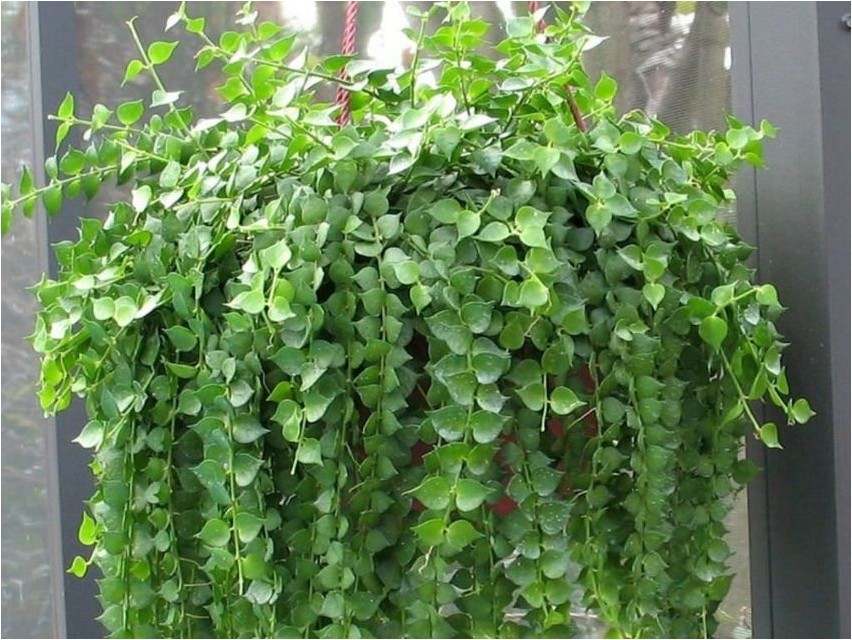
Dischidia crested is one of the plants of the family Palmaceae. In Latin, the name of this plant is as follows: Dischidia pectenoides.
As for the name of the family itself, in Latin it will be: Asclepiadaceae.
Description of growing features
It is worth noting that this plant is not particularly demanding to care for, however, in order for the crested dischidia to develop safely, certain growing rules will need to be followed. As for the light regime, the plant can be grown both in the sun and in partial shade. In summer, it is recommended to provide the plant with moderate watering, and air humidity should always be kept at a fairly high level. The life form of Dischidia crestata is an epiphyte.
As for the use of this plant, it should be noted that growing the plant indoors is very problematic. For this reason, it is recommended to grow the plant in greenhouses, as well as in greenhouses, and also in warm winter gardens. Dischidia crest is used as an hanging plant, and also for vertical gardening. Also, quite often this plant also acts as an epiphyte in various compositions.
In cultivation, this plant is capable of reaching maximum sizes, at which the length of the shoots of dischidia crest is about thirty to fifty centimeters. The plant will need to be replanted as the substrate compacts. In addition, replanting will also be required in the case when the plant itself grows.
It is recommended to select the following composition of the soil mixture: for this, take two parts of fern roots and one part of sphagnum, and add a little charcoal to this soil mixture. It is noteworthy that sometimes fern roots can be replaced with pieces of pine bark. The size of such pieces should be approximately half a centimeter to one and a half centimeters. However, when you add pieces of pine bark, you will also need to add peat or dry leaves. The acidity of the soil will be either acidic or slightly acidic.

It is important to remember that this plant will react extremely negatively to excessively dry air. When the lighting is too low, the flowers of Dischidia crestata may fall off. Such adverse consequences can also arise due to sharp fluctuations in temperature, as well as low air humidity. Also, due to unfavorable conditions, the plant will not form bubble-shaped pitcher leaves. It is recommended to water the dischidia comb with soft water.
Throughout the entire rest period, you will need to ensure a temperature of eighteen to twenty-two degrees. Watering should be moderate. In indoor conditions, a period of rest is forced and this period of rest occurs due to low air humidity and insufficient light levels.
Reproduction of dischidia crested occurs through rooting of cuttings, while the soil temperature should be approximately twenty to twenty-five degrees, and air humidity should be kept at seventy to eighty percent. It is noteworthy that sometimes the plant is also propagated using seeds.
It is important to remember that comb dischidia will require spraying every day, and the shoots need support. Throughout the winter period, fertilizing should be done approximately once a month using flower fertilizer taken in half concentration.
The leaves and flowers of dischidia crest are endowed with decorative properties. The leaves can be either oval and small in size, or bubble-shaped pitcher leaves. These bubble-shaped leaves are five centimeters long, they are green on the outside, and red-brown on the inside.