Curly Kale
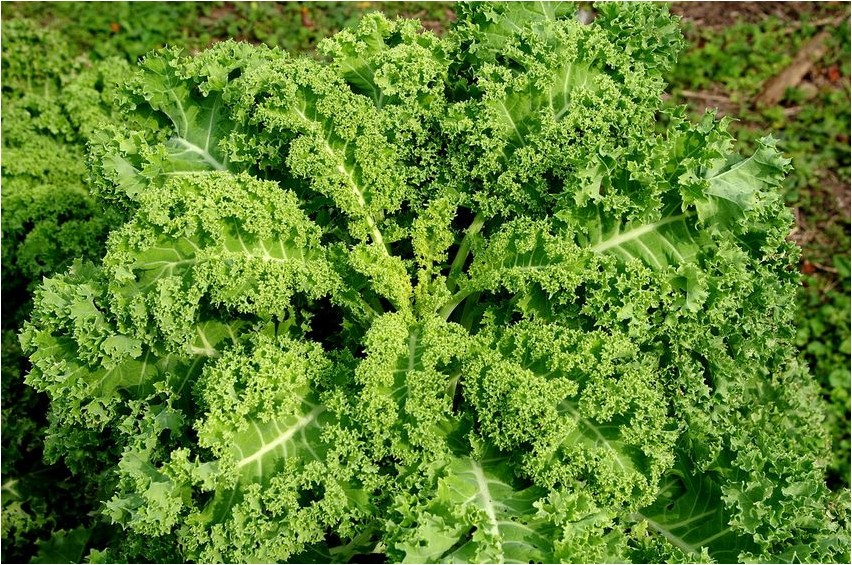
Curly kale (Brassica oleracea var. sabellica) is a relatively new vegetable crop that isn”t very popular among gardeners. It belongs to the Brassicaceae, or Cruciferae, family.
Other names include leaf kale, Grunkol cabbage, and Brunkol cabbage. This species naturally grows in the Mediterranean region. It is currently widely cultivated in Europe and China. Curly kale is similar in appearance to ornamental cabbage, but unlike its relative, it is edible. Grunkol cabbage does not form a head; its leaves are used for food.
Description
Curly kale is a biennial plant that, after sowing, produces a stem 1 to 3 cm tall and leaves, and the following year, a seed-bearing flower stalk. The leaves of this species are smooth, incised, and entire, and can be lyrate-shaped or lyrate-lobed. The crop is highly winter-hardy; it”s hard to believe, but mature plants can easily withstand night frosts down t o-10°C.
Growing Tips
Curly kale loves the sun and is best planted in open areas; it also grows easily in partial shade. It is quite demanding in terms of soil conditions. It prefers nutritious, mineral-rich, loose, light, moderately moist, and permeable soils. It does not tolerate damp, waterlogged, acidic, heavy soils, or low-lying areas. The best predecessors are legumes and members of the Solanaceae family. Soil Preparation and Sowing
The beds for this crop are well cultivated, with the addition of complex mineral fertilizers or 20-30 g of ammonium nitrate, 35-40 g of granulated superphosphate, and 10 g of potassium chloride. Acidic soils are preliminarily limed. Kale seeds are sown in open ground in the spring or in boxes with nutritious soil to produce high-quality seedlings.
To obtain kale seedlings, sow them between the third ten days of April and the first ten days of May. Before sowing, treat the seeds with a weak solution of potassium permanganate. Place the seeds to a depth of 10 mm.
Once the seedlings emerge, thin them out and fertilize with manure diluted in water (4 parts water to 1 part manure). After two weeks, re-fertilize with nitrogen fertilizer. A couple of weeks before planting the seedlings in the ground, they are pollinated with pyrethrum and hardened off.

The roots of cabbage seedlings are dipped in clay mash, pollinated again with pyrethrum and planted in rows, leaving a distance of 30-50 cm between them. The distance depends on the variety. Vigorous varieties require more space. Immediately after planting, young plants are watered abundantly.
The seedless method involves sowing on previously prepared beds, leaving at least 50-60 cm between the rows. When one or two leaves appear on the seedlings, thinning is carried out, and when 5 leaves appear, thinning is carried out again.
Care
In general, there is nothing complicated in caring for curly cabbage; regular watering, weeding, fertilizing, and loosening the rows is sufficient. Treatments against insects and diseases as necessary. For ease of watering, small holes are made around the plants. The crop needs abundant watering in dry weather.
Throughout the growing season, the soil is constantly loosened. As soon as young plants begin to actively grow, they are fed with liquid organic fertilizers, and herbal infusions can also be used. It is not recommended to apply too large doses of nitrogen fertilizers, as they may affect winter hardiness.
Harvest
Harvesting is carried out selectively, starting from the second or third ten days of June. Several lower leaves are removed from each specimen. In the twentieth of September, healthy and underdeveloped plants are moved into containers and grown in a room at room temperature.
Kale





