Bow-anzur
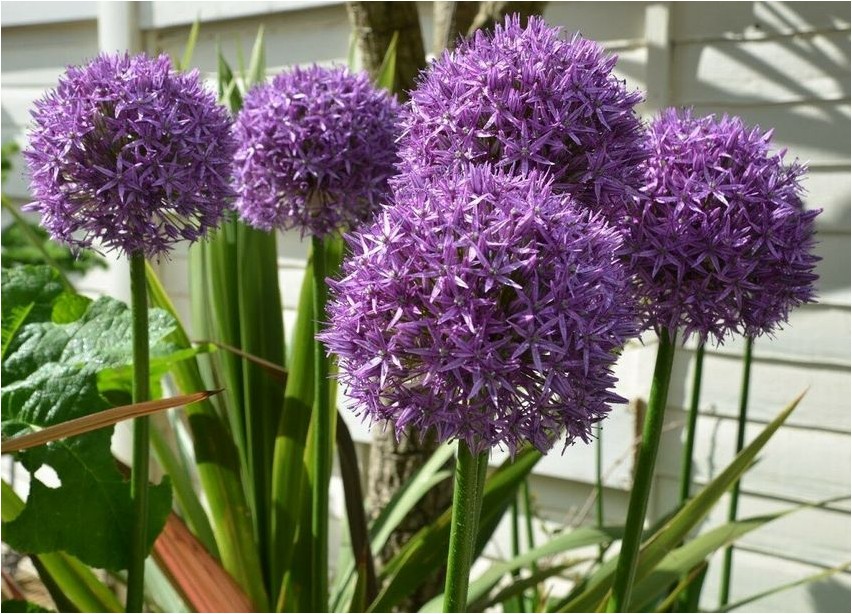
Anzur onion (lat. Allium suworowii) is a perennial belonging to the Liliaceae family. The plant is often called Suvorov onion, decorative onion, giant onion, stalked onion.
In nature, the plant in question is found in Siberia and some Asian countries. The bulbs of the plant are similar to the bulbs of the famous flower crop — tulips. The taste of the anzur onion is very specific.
Description
Anzur onions are represented by perennial herbaceous plants with flat-round or ovoid bulbs that reach a diameter of 5-10 cm. They can have a wide variety of colors, for example, grayish, white, silver. The foliage of the anzur onion is quite wide, pubescent along the edges, with a bluish bloom, their length varies from 20 to 50 cm. The plant forms flexible arrows, they are green in color, up to 1. 5 m in height. The inflorescence is in the form of spherical or hemispherical umbrellas, which reach 15-20 cm in diameter. The flowers are small, inconspicuous, lilac, purple or deep purple in color, sometimes with dark veins on the petals. The crop in question blooms in mid-May. The seeds are quite large and black in color.
Several years after planting the crop, the bulbs develop at a slow pace. It’s hard to imagine, but only in the third year does the bulb reach a size of only five centimeters, then shoots arrows and forms small baby bulbs. Anzur onion is drought-resistant and can withstand frosty winters without problems. It is negative for damp soils, as well as lowlands where precipitation accumulates in the spring. Anzur onion is considered a medicinal plant; it has a positive effect on the human body, since it contains many vitamins and biologically active substances.
Subtleties of cultivation
Anzur onion prefers sunny areas with light, permeable, loose, nutritious, neutral soils. Sandy soils are recognized as the best for growing anzur. Saline, swampy, dry, poor and highly acidic soils are not suitable for cultivating the crop in question. The groundwater must also be deep, otherwise the bulbs will begin to rot. Protection from cold northern winds is welcome, otherwise strong gusts will break the plants. It is better to plant anzur onions after vegetables, with the exception of the Solanaceae family.
Features of reproduction
Anzur onion is propagated by seeds, as well as annual bulbs. Propagation by seeds is a rather labor-intensive method, but it allows you to get good results. Before sowing the seeds, they are stratified by keeping them in moist sand for six months at a temperature of about 1-2C. Sowing seeds in spring and autumn is not prohibited. Flowering of anzur onions grown by sowing seeds is observed in the third year, sometimes earlier.





