Onion Regel
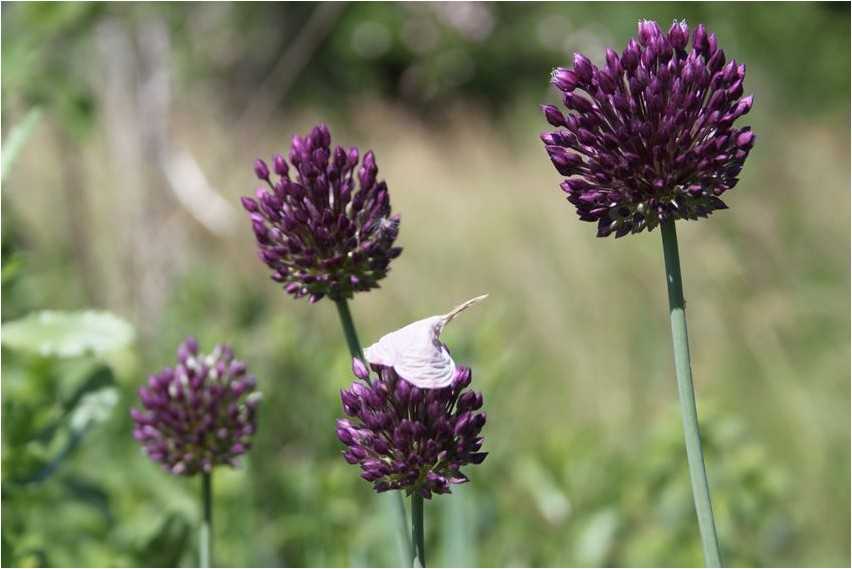
Regel”s onion (lat. Allium regelii) is a perennial herbaceous plant of the Onion genus of the Onion family, characterized by its high decorative value.
The natural habitat is the mountainous regions of Turkmenistan, the northwestern regions of Iran and Afghanistan. Typical habitats are gravelly slopes and sandy deserts.
Characteristics of culture
Regel”s onion is a plant with a spherical bulb, reaching 1-2 cm in diameter. The shells are leathery or papery, blackish. The stem is up to 70 cm high. The leaves are linear-lanceolate, slightly rough along the edge, up to 1. 5 cm wide. The flowers are collected in loose, few-flowered, bunched or hemispherical umbrellas. The perianth is narrowly bell-shaped, pink. The tepals are narrow, lanceolate, sharp, and slightly curl as they grow. The fruit is a broadly ovoid capsule with a diameter of up to 8 mm.
Subtleties of cultivation
Regel”s onion is a very unpretentious plant, it reproduces easily and does not require special care. But to improve decorative qualities, several important rules should be followed. The area for growing the crop should be well lit and protected from cold winds. In the shade, Regel”s onion blooms poorly, and its bulbs rot. Plants readily develop on loose, fertile, permeable, neutral soils. The culture does not tolerate stagnant water; this can also lead to rotting of the bulbs. Regel”s onions are drought-resistant, but require infrequent watering.
This type of onion is propagated by seeds and bulbs. The second method is the most common among gardeners. To obtain planting material, the mother plant is dug up (immediately after flowering and the leaves turn yellow) and the children are separated from the main bulb. Division is recommended to be carried out at least once every 3-5 years. The planting depth should be greater than the diameter of the bulb. The optimal distance between plants is 10-20 cm.
The seed method of propagation takes longer than the vegetative method. In addition, such plants bloom only in the third year after sowing. The seeds are collected immediately after ripening and sown in open ground in late September — early October. With the onset of cold weather, the beds with crops are carefully mulched with sawdust or peat, and in the spring the old mulch is removed. In the southern regions, mulching is not necessary. In regions with frequent and heavy rains, plants are dug up annually, since they are subject to various types of rot and need to be dried, otherwise death cannot be avoided.

Care
There is nothing complicated about caring for Regel onions. These are standard procedures for all representatives of the Onion family, or rather, weeding, watering, fertilizing and loosening the rows. Mulching is desirable, because a layer of organic material will protect the soil from overheating, retain moisture for a longer period and get rid of malicious weeds. For the winter, Regel onions are covered only in regions with cold and snowless winters.
Application
The Regel onion is very decorative. It is suitable for garden design. Its allies can be roses, delphiniums, primroses, hosts, cuffs, aquilegias, irises, peonies, poppies, geraniums, chistema and euphorbia. Low-growing forms of Regel onions look ideal in rocky gardens and in the foreground of mixborders. Tall ones are good in group plantings on the lawn. It is not forbidden to grow Regel onions in containers with which you can decorate gazebos and terraces.





