Lupine angustifolia
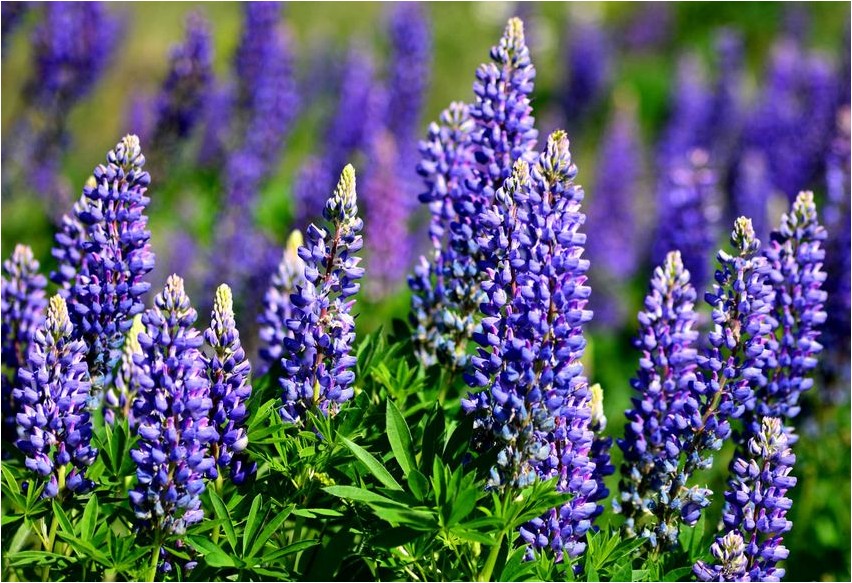
Narrow-leaved lupine (Latin Lupinus angustifolius) is a herbaceous flowering plant of the genus Lupine (Latin Lupinus), included by botanists in the legume family (Latin Fabaceae).
Like many fruits of plants of the glorious family, the beans and seeds of Lupine angustifolia are used by people as a food product rich in plant protein. In addition, the plant is very decorative and often decorates flower beds and gardens. Lupins” ability to fix nitrogen from the atmosphere and enrich the soil with it makes the plant a popular green manure for depleted lands. In addition to the Latin name, which botanists assign to all plants, arranging them according to genetically related shelves, the plant also has folk names. One of them is the widely used name “Lupin blue”.
Description
Angustifolia lupine is an erect herbaceous annual plant that grows up to a meter in height, rarely more than a meter.
Lupine leaves are palmately divided into narrow linear leaflets up to 4 centimeters long, the number of which varies from 5 to 9 pieces. The stems and leaves of Lupine angustifolia are lightly covered with hairs in some places.
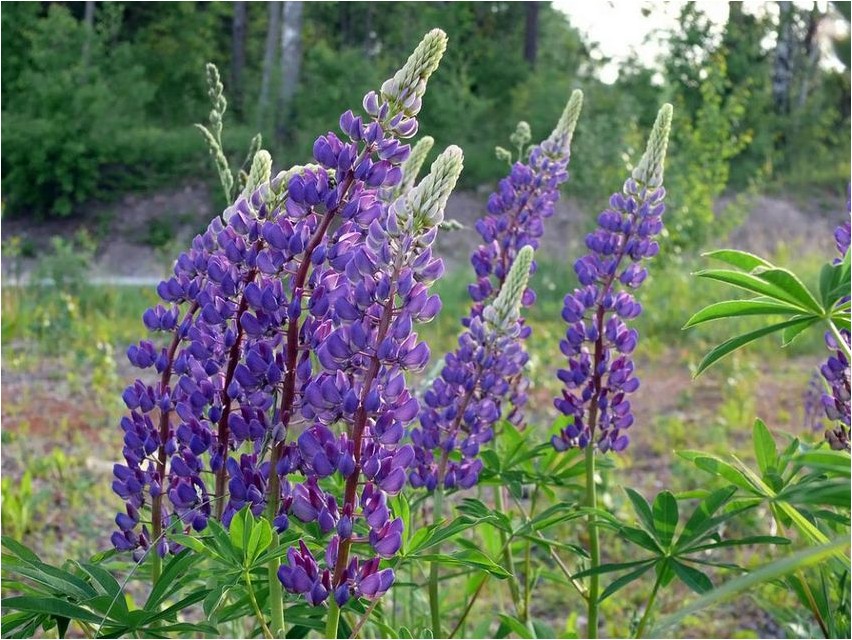
The inflorescence is formed by numerous flowers of a typical form for plants of the legume family. The color of the flowers is multifaceted and has shades of pink, purple, blue or white.
The fruit of the plant is a traditional bean pod, inside which seeds of different colors are hidden from adversity. They can be white, dark gray to brown, or spotted or mottled. Interestingly, the color of the seeds can be used to determine the color of future flowers. White seeds will give birth to plants with white or lilac corollas, spotted seeds will give birth to plants with pink or blue flower corollas.

Edible fruits of Lupine angustifolia
Angustifolia lupine, which grows in the wild, contains toxic alkaloids in its seeds, giving them a bitter taste and a danger to human health. But smart people 6, 000 years ago managed to outwit nature and made the seeds edible by first soaking them in running water, which could absorb the bitterness.
Modern humans have gone even further, delving into the genetic sequence of the narrow-leaved lupine. They have managed not only to remove the bitterness from the seeds but also to sweeten them. Similar work has been actively carried out by breeders in Australia. Therefore, today, on the smallest continent of our small planet, one can enjoy a delicious lunch made from the seeds of the narrow-leaved lupine without worrying about adverse effects on the body.
On the contrary, the high content of easily digestible plant protein, as well as dietary fiber and other beneficial components, makes such products very attractive to people who have stopped consuming animal protein. Furthermore, such products can support the life of people with diabetes. Such food is also suitable for healthy individuals concerned about maintaining their health for many years to come. Accumulated experience with the consumption of products from the seeds of the narrow-leaved lupine shows that the digestibility of plant protein by the human body reaches up to 90 percent, and the biological value of such protein is estimated by experts at 53 percent. Cultivation
Like many related plants, narrow-leaved lupine is very easy to grow in any moderately good soil. It prefers light, sandy, and acidic soils. It dislikes chalky soils.
It prefers sunny locations and avoids shade.
Blue lupine is a good companion plant for most vegetable crops. It cooperates with certain soil bacteria that form nodules on the plant”s roots, which fix atmospheric nitrogen. Some of the nitrogen obtained in this way is used by the narrow-leaved lupine itself, and the rest is generously shared with other crops growing nearby. Therefore, when the plant completes its growing cycle, removing the surface debris of the narrow-leaved lupine, its roots should be left in the ground so that, as they rot, they release all the accumulated nitrogen into the soil.
Narrow-leaved lupine green manure mixture. Brief overview, description of characteristics, where to buy seeds