Raspberry erucifolia
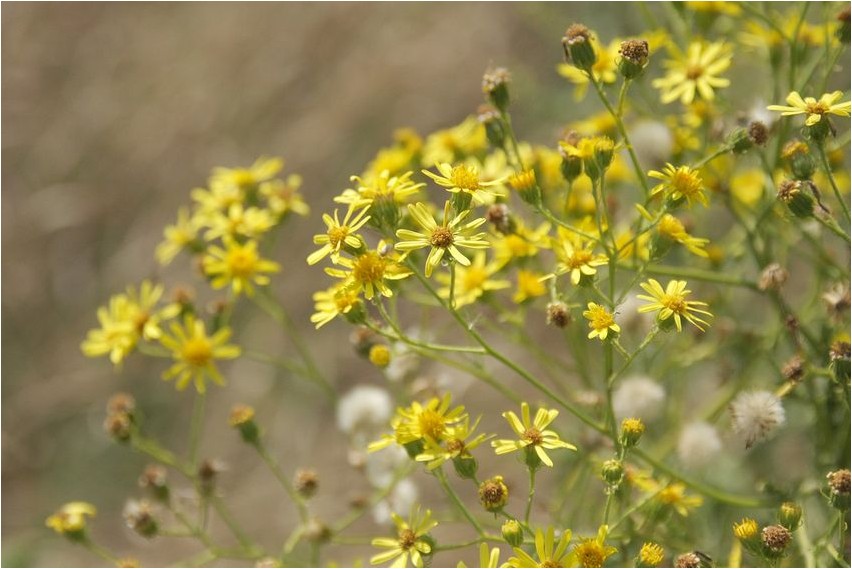
Erucifolia ragwort is one of the plants of the family called Asteraceae or Asteraceae; in Latin the name of this plant will be as follows: Senecio erucifolius L.
As for the name of the erucifolia family itself, in Latin it will be like this: Asteraceae Dumort.
Description of the erucifolia ragus
Erucifolia ragus is a perennial herbaceous plant, the height of which will fluctuate between forty and one hundred centimeters. The rhizome of this plant is creeping, and the stem will be straight; it can be either bare or slightly cobwebby and fluffy. At the same time, in the upper part such a stem will be slightly branched, and sometimes it can be painted in reddish tones. The basal and lower stem leaves of the erucifolia erucifolium wilt early; on the petioles such leaves will be lyre-pinnately dissected. The baskets of this plant will be numerous; such baskets form a corymbose inflorescence. The reed flowers of erucifolia are painted in yellow tones; in total there will be about ten to fifteen such flowers. The flowers are oblong, their length is ten millimeters, and their width is no more than two millimeters. The length of the achenes of this plant is two millimeters; such achenes are ribbed.
Flowering of the erucifolia ragus occurs in the period from June to August. Under natural conditions, this plant is found in the European part of Russia, the Siberian Arctic, the Caucasus, Ukraine, Belarus, Central Asia, as well as in Western and Eastern Siberia. For growth, this plant prefers steppe slopes, saline meadows and places along river banks. It should be noted that erucifolia is also a very valuable honey plant.
Description of the medicinal properties of ragwort erucifolia
The erucifolia ragwort is endowed with very valuable healing properties, and it is recommended to use the flowers of this plant for medicinal purposes. The presence of such valuable healing properties should be explained by the content of tannins, saponins, alkaloids, rubber, flavonoids, fumaric acid, polyacetylene compounds and sesquiterpenoids in this plant.
As for Tibetan medicine, the flowers of this plant are widespread here. Such flowers of godson erucifolia are recommended for use against tachycardia, atherosclerosis, nephritis, gout, pneumonia, various respiratory infections and rheumatism.

For colds, the fresh juice of this plant is quite effective. This juice of ragwort erucifolium should be taken two to three times a day, one teaspoon.
As a very valuable hemostatic agent for metrorrhagia, it is recommended to use the following remedy based on ragwort erucifolia: to prepare such a remedy you will need to take one tablespoon of dry crushed herb of this plant per glass of water. The resulting healing mixture should be boiled for about three to four minutes, and then this mixture is left to infuse for about two hours, after which this mixture based on ragwort erucifolia should be filtered very carefully. Take this remedy based on this plant three times a day, one or two tablespoons. It is important to remember that in order to achieve the greatest effectiveness when taking such a remedy, one should not only strictly observe all the norms for its use, but also carefully follow all the rules for preparing such a healing remedy based on the erucifolia ragus.





