Myrtle
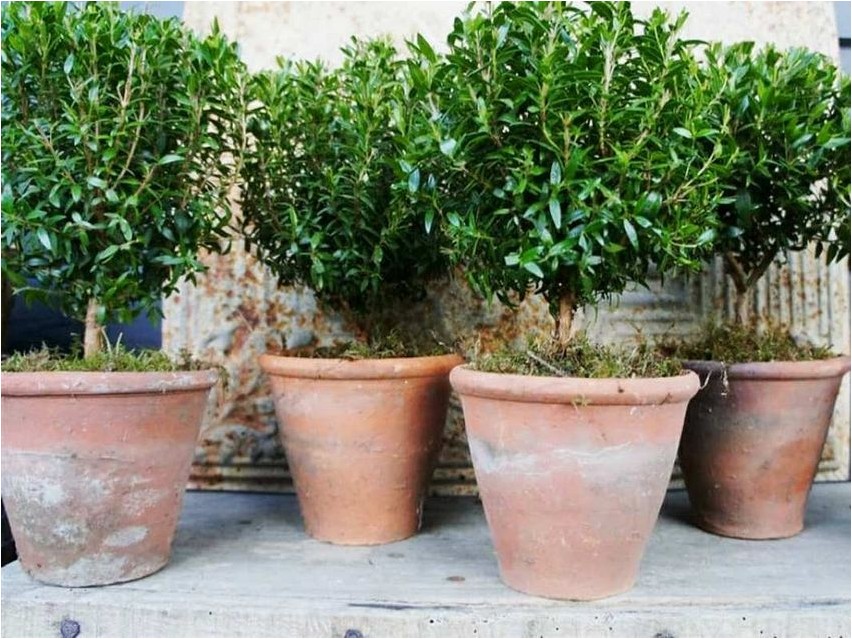
Myrtle (Latin: Myrtus) is a genus of evergreen plants in the Myrtaceae family. The genus comprises approximately 40 species. The plant”s homeland is considered to be North Africa, the Azores, and the Mediterranean.
Myrtle branches and wreaths of its flowers were once considered symbols of peace, silence, and pleasure.
Cultural Characteristics
Myrtle is an evergreen tree or shrub up to 4 m tall with erect stems. The leaves are oval, leathery, pointed, up to 2-4 cm long, and sit on short petioles. The leaves contain essential oils that give the plant a distinct aroma.
Myrtle flowers are solitary, five- or six-petaled, pink, cream, or white. Myrtle blooms in early summer. The fruit is an edible berry, pear-shaped or round, most often blue with a bluish bloom. There are many legends associated with this plant, including claims that an infusion of myrtle leaves preserved eternal beauty and youth. In southern countries, myrtle is grown outdoors, while in Europe and Russia, it is used as a houseplant.
Growing Conditions
Grow the plant in sunny, draft-free areas. When growing myrtle indoors, keep the plants on windowsills protected from direct sunlight. The optimal growing temperature in summer is 20-22°C (68-72°F), and in winter, 10°C (50°F). Loose, non-compacted, fertilized, and moist soil is preferred.
Propagation and Planting

Myrtle is propagated by seeds and cuttings. Seeds are sown in seedling containers filled with a 1:1 mixture of sand and peat. Until germination, the seedlings are covered with glass and placed in a room with a temperature of at least 20°C (68°F). Regular watering and ventilation are essential. Drafts are undesirable. Seedlings emerge in 1. 5-2 weeks. When the seedlings have two true leaves, they are transplanted into individual pots.
Myrtle grown outdoors is propagated by cuttings in January-February; myrtle is propagated in spring. Cuttings are taken from semi-woody shoots and then planted in wide, low containers with equal parts of turf, leaf mold, and coarse sand. Until rooting occurs, keep the cuttings in a shaded area under a plastic cover. Regular watering and ventilation are necessary to ensure a healthy and well-developed root system. Cuttings root in approximately 30-40 days, after which they are transplanted into individual pots.
Growing myrtle as a houseplant has been practiced relatively recently and is not widespread in Russia. Many people think that culture is too demanding, but this is a misconception. Most types of myrtle tolerate replanting without problems, which experienced gardeners recommend doing in the spring.
Care
Caring for myrtle is simple. It is important to provide the plants with regular watering, otherwise their foliage will acquire an unhealthy yellowish color. Fertilizing is carried out during the period of active growth. Indoor myrtles are fed in spring and summer at least once a month. Both organic and mineral fertilizers are suitable for fertilizing. Myrtle also requires formative pruning, which is carried out in early spring or during transplantation.
Application
Myrtle is widely used not only in gardening and indoor floriculture, but also in folk medicine. It has been proven that infusions from the leaves of the plant have bacterial properties. The essential oil produced from the leaves and other aerial parts of myrtle is used in perfumery.
What does MIRT bring to the house? Myrtle tree — signs and superstitions.