Sage
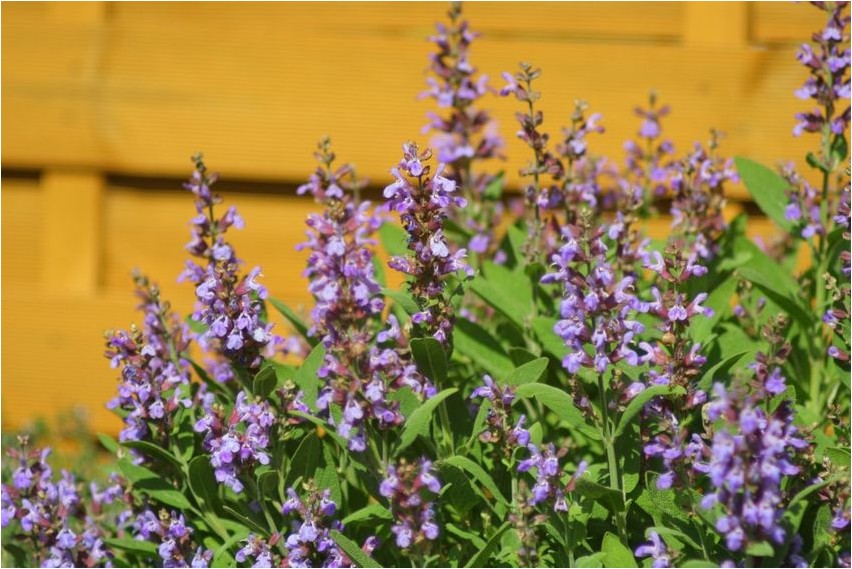
Sage (lat. Salvia officinalis) is a subshrub or herbaceous plant from the Lamiaceae family.
Description
Sage is a subshrub or herbaceous perennial, growing upward from twenty to seventy-five centimeters.
Its powerful woody roots are usually densely fibrous at the bottom and always branched, and the strongly leafy and rather branched straight stems are tetrahedral and herbaceous above, and woody below. In winter, the upper parts of the stems usually die off.
The densely pubescent leaves of sage are colored in pleasant grayish-greenish tones, and it blooms with magnificent purple flowers.
Where does it grow
The birthplace of sage is considered to be Italy and a number of countries in southeastern Europe (the former Yugoslav republics, Albania and Greece). And currently it is successfully cultivated both in these countries and in Russia, as well as in Moldova, Slovakia, Ukraine, the Czech Republic and France. It grows in fields, as well as in gardens or vegetable gardens (either as a wild or cultivated plant).
Application
Sage is widely used in medicine and for obtaining valuable essential oil, and sage is quite actively used for cooking. In cooking, sage leaves have found their use in food concentrates, as well as in the canning, fish and alcoholic beverage industries. They also season fish, meat, as well as soups, salads, poultry, vegetables and even sweet dishes. Sage can add a delicious piquant aroma to homemade pie fillings and various grated cheeses. It is especially popular in the cuisine of the USA and a number of southern European countries. And Russians sometimes add sage leaves to pickled or spicy herring.

Sage leaves have a powerful analgesic and diuretic effect. And the excellent anti-inflammatory properties of this herb appear even when used externally – for example, with the help of sage you can get rid of acne quite quickly.
Sage decoction is an effective antitussive remedy. It will be no less useful in the treatment of various colds or sore throats, as well as in case of loss of voice. The high effectiveness of this plant has also been proven in cases of problems with the liver, gastrointestinal tract or kidneys – dried sage leaves can often be found as part of intestinal and gastric herbal preparations.
An excellent sage wine, widely used for medicinal purposes, is prepared from this herb. To prepare it, 80 grams of dried leaves are poured with a liter of ordinary wine, after which the healing potion is infused for a week in a dark place.
As for preparations made on the basis of this medicinal herb, they are often used in the fight against various microbial flora and staphylococci. Sage also promotes rejuvenation, because it has gained fame as a powerful natural antioxidant.
Sage essential oil has found its use in perfumery and cosmetology – it is especially often used to flavor all kinds of toothpastes and a wide variety of powders.
Contraindications
Sage can harm people suffering from hypertension, epilepsy or acute nephritis. In some cases, allergic reactions (swelling of the nasopharynx, itching or skin rash) may also occur. Individual intolerance to a wide variety of products, which include sage, should not be completely ruled out. And for children under two years of age, as well as for pregnant women, sage is strictly contraindicated. Nursing mothers should not resort to its help either.
Growing and care
Sage boasts very good drought resistance and does not tolerate excessive moisture at all. In addition, it is very thermophilic – with scanty snow cover or in very harsh winters, it quickly freezes out.





