Elm bare
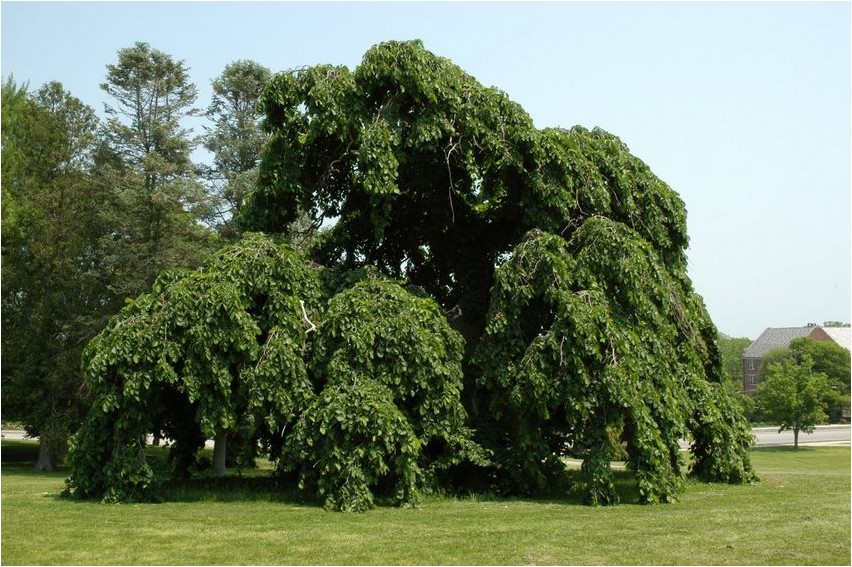
The naked elm is one of the plants of the family called elm, in Latin the name of this plant will be as follows: Ulmus glabra Huds.
As for the name of the bare elm family itself, in Latin it will be: Ulmaceae Mirb.
Description of naked elm
The naked elm is also known as the naked elm. This plant is a tree whose height reaches about thirty meters. The bark of young branches of this plant will be dark brown and also warty, while the bark of adult plants is gray. The leaves of the naked elm will be large, they are obovate, and towards the base they will be quite unequal, their apex will be pointed. The edges of such leaves are steeply serrated, the teeth can be either double or triple notched, their length will be about eighteen to twenty centimeters, while the width of such leaves will be approximately ten to twelve centimeters. The fruit of the naked elm is an obovate lionfish.
Under natural conditions, this plant is found in Ukraine, Belarus, the Caucasus, and also in the European part of Russia. To grow, this plant prefers rich, well-aerated carbonate soils along river banks, along river terraces, and also near spring outlets. In addition, the plant also grows in oak and oak-hornbeam forests, sometimes forming rather small pure stands, in the mountains to approximately 2000-2200 meters above sea level.
Description of the medicinal properties of naked elm
It is noteworthy that this plant is endowed with quite valuable healing properties, and for medicinal purposes it is recommended to use the bark of the roots, leaves, bast, as well as the bark of the trunks.
The presence of such very useful medicinal properties is due to the fact that the young branches of naked elm contain the following carbohydrates: galactose, galacturonic acid and rhamnose. The bark of naked elm will contain catechins: leukocyanidin, tannins and alpha-catechin. At the same time, the wood of this plant contains triterpenoids and sexviterpenoids. The leaf buds will contain carotene, and the leaves will contain carotene, vitamin C, chlorogenic acid, catechin, as well as flavonoids such as rutin and isoquercitrin. The buds of naked elm contain fatty oil, carotene and vitamin E.

It should be noted that a decoction of the bark of this plant is also widely used as an anticancer agent. To treat chronic skin rashes and scrofulosis, the following remedy is used: an essence is prepared from the inner part of the bark. As for Tibetan medicine, drugs based on this plant are widely used to treat purulent wounds and malaria. In the form of a wine decoction, naked elm is used as an anticancer agent. A decoction prepared from the bark of this plant has a tonic, astringent, as well as antibacterial and anticatarrhal effect; in addition, such a decoction of the bark will also accelerate blood clotting. A paste prepared from the leaves and young bark of the naked elm has proven effective in treating tumors and burns. It is worth noting that the leaves of this plant have similar effects as the bark. The bark of the trunk and roots of naked elm can also exhibit antibacterial activity against various microbacteria and Staphylococcus aureus.
It should be noted that the bark of the trunks is also used for tanning leather and dyeing fabrics yellow. The bast of this plant is used to make ropes, and the growths on the branches of the naked elm are used as a substitute for cork. In addition, it is noteworthy that the wood of this plant is also used in a similar way to hornbeam elm.





