Melissa
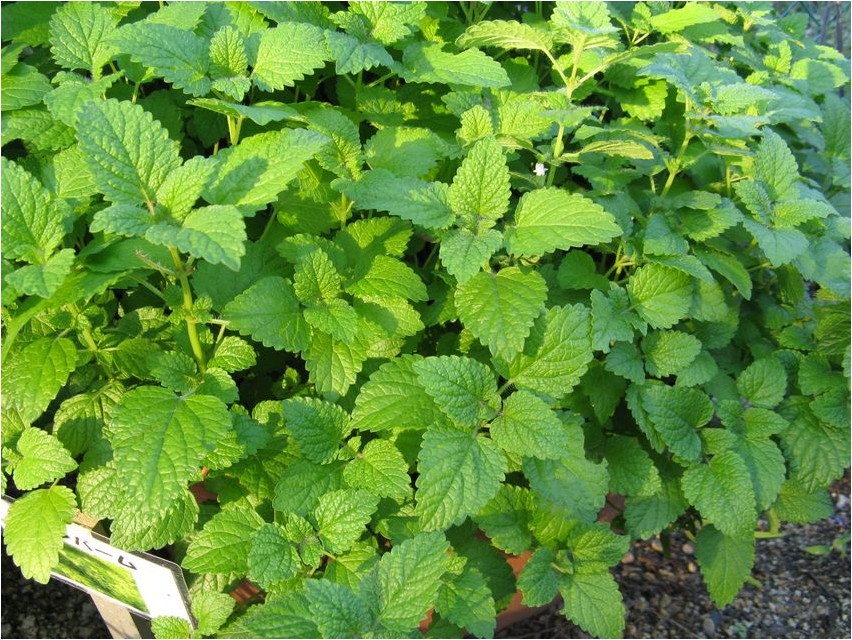
Melissa (Latin: Melissa) is a perennial essential oil plant of the Lamiaceae or Labiatae family. In the wild, lemon balm grows in Southern and Central Europe, Iran, North America, Central Asia, the Caucasus, Ukraine, and the Balkans.
The miraculous properties of lemon balm were first described in the works of the ancient Greek philosopher and naturalist Theophrastus.
Culture Characteristics
Melissa is a herbaceous plant up to 1 m tall with a highly branched rhizome. The stem is tetrahedral, branched, nearly glabrous or pubescent with short, glandular hairs. The leaves are light or bright green, opposite, ovate or rounded-diamond-shaped, with crenate-serrate margins, pubescent over the entire surface, and located on petioles. The flowers are small, gathered in false ring-shaped inflorescences of 6-12, located in the axils of the upper leaves. The calyx is glandular and long-haired, with awl-shaped teeth beneath. The corolla is pale lilac or bluish-white. The fruit is quite large, consisting of four oval, glossy black nuts. The seeds remain viable for about 2-3 years. Flowering occurs from June to August, and the fruits ripen in late August to early September. In the Russian climate, lemon balm is aggressive, so it is recommended to grow it in containers.
Growing Conditions
Lemon balm is a light-loving plant, preferring sunny sites protected from strong and cold winds. It prefers light, fertile soils with a deep water table and a neutral or slightly acidic pH. The plant can grow in one location for about 4-5 years, after which it needs to be replanted. The crop is not particularly winter-hardy.

Propagation and Planting
Lemon balm is propagated by seeds, cuttings, and rhizome division. It is most often grown from seedlings by sowing seeds in seedling trays under plastic. The optimal temperature for seedlings until germination is 25°C (77°F). Planting in open ground occurs after the threat of spring frost has passed.
The plot for lemon balm cultivation is prepared in the fall: the soil is dug over, cleared of weeds and their roots, organic and mineral fertilizers are added, and beds are formed. Acidic soils are pre-limed, and areas with stagnant water are drained with fine gravel or broken brick. The distance between plants should be approximately 30-40 cm, and between rows 45-50 cm. For a more aesthetically pleasing appearance, the distance between plants and rows should be 60 cm.
Division and cuttings are carried out in May or August. For these propagation methods, it is better to choose 3-5 year old bushes. The mother bush is divided into parts of approximately the same size, but so that each division has at least 4 shoots with roots. Cuttings are cut from one-year-old shoots. The divisions and cuttings are planted immediately in a permanent place.
Care
Melissa does not require special care. Regular and abundant watering is carried out until seedlings emerge, after which the plants are moistened only during prolonged drought. The culture welcomes systematic loosening of the soil between the rows and weeding of weeds; mulching the ridges with peat or plastic film helps prevent the latter; in addition, mulch prevents premature evaporation of moisture.
In regions with cold winters, lemon balm needs to be covered with fallen leaves or sawdust. In early spring, immediately after the snow cover melts, it is advisable to fertilize with organic and mineral fertilizers. Since lemon balm contains a large amount of essential oils, the plant is rarely attacked by pests, and therefore does not need preventive measures to combat them.
Collection and preparation
Melissa is collected before flowering; it is cut using pruning shears or garden shears at a distance of 10 cm from the surface of the ground. Melissa grown in large areas is cut with a trimmer, scythe or sickle. For preparations, only the apical stems are used; they are dried in ventilated and shaded areas, spread out on paper or tied up in small bunches.
Sometimes lemon balm is dried in a regular oven at a temperature of 35-40C with the door slightly open. Completely dry leaves are crushed by hand, placed in a light-proof container and covered with a lid. It is best to store lemon balm away from other aromatic plants so that it does not absorb foreign odors.
Application
In many countries around the world, lemon balm is used as a herb; it is used in cooking: for home canning, for making medicinal teas, infusions and some alcoholic beverages. Melissa is a real find for true gourmets who want to combine the aroma of citrus fruits with notes of honey. It can add spice to many dishes.
In folk medicine, the plant is used as an analgesic, sedative and antispasmodic, as well as in the treatment of cardiovascular diseases. Melissa is often grown in flower beds, ridges and other types of flower beds; it looks impressive and dilutes compositions consisting of perennial and annual flower crops.
MELISA feat TOMMO – Will carry on (Official Video) by TommoProduction





