Fragrant Callisia
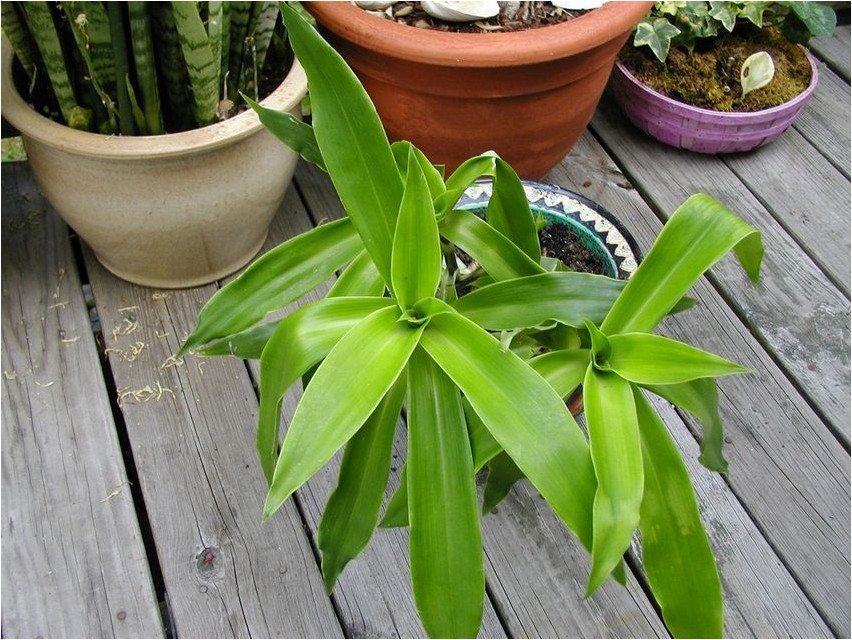
Fragrant Callisia is sometimes called golden mustache; its Latin name is Callisia fragrans.
Fragrant Callisia belongs to the Commelinaceae family of plants.
Description of Fragrant Callisia
For the plant to thrive, it requires ample watering throughout the summer. It is also important to maintain a fairly high humidity level. Regarding light requirements, fragrant callisia thrives in both sun and partial shade. This plant is an herbaceous plant.
Fragrant callisia is often found in greenhouses, conservatories, and in beds under plastic. It is also very popular indoors: in this case, it is recommended to choose either a west- or east-facing window. If you plan to grow the plant on a south-facing window, provide some shade. Fragrant callisia can also act as a groundcover in pots alongside other large plants.
It’s worth noting that this plant also has valuable medicinal properties. However, it’s important to remember that only young shoots of fragrant callisia, which have dark purple leaves, are needed to prepare medicinal infusions.
This plant can reach a height of seventy centimeters to two meters.

Description of care and cultivation features for fragrant callisia
For optimal development, this plant will require repotting, which should be done either annually or every two years. Shallow but wide pots are suitable for repotting, as the root system of this plant is quite weak, but capable of growing very quickly. As for the soil mixture itself, you’ll need to mix one part turf and sand, along with three parts compost. The soil should be slightly acidic.
It is important to remember that insufficient lighting can have an extremely negative impact on the development of fragrant callisia: the leaves of this plant can not only turn pale, but also change color from dark purple to regular green, and in addition to this, they can also stretch out quite unsightly in height. It is not recommended to move the plant relative to the light source, and fragrant callisia should be sprayed several times a day. It is extremely undesirable to allow the soil to dry out: such a circumstance can lead to very disastrous consequences.
As for special care requirements, short anti-aging pruning and pinching of shoots will help maintain the attractiveness of fragrant callisia for a long time. It is recommended to perform pruning every two to three years, and shoots should be pinched every year. If the air humidity drops below sixty percent, the plant may be damaged by spider mites: therefore, it is so important to constantly monitor the humidity and do not forget to spray fragrant callisia.
Throughout the rest period, it is important to ensure a temperature of approximately thirteen to seventeen degrees Celsius. The dormant period when growing fragrant callisia at home is forced: it begins in October and ends in February. The dormant period occurs due to low levels of illumination and insufficient air humidity.
Most often, propagation of this plant occurs using apical cuttings, which should be rooted in water. If you choose this method of propagation, in about a week the young plant will already have roots.