Chervil garden
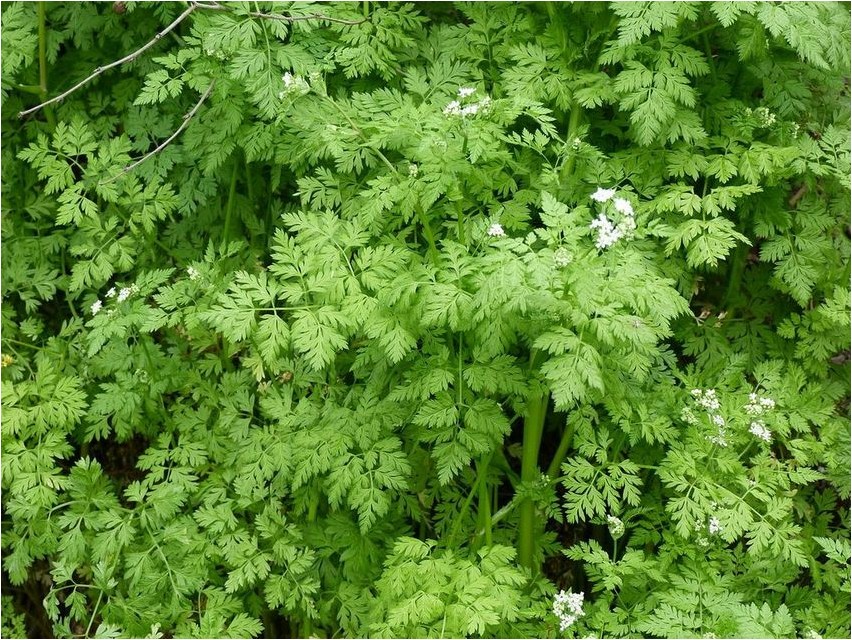
Chervil oleracea is one of the plants of the family called Umbellaceae; in Latin the name of this plant will be as follows: Anthriscus cerefolium.
As for the name of the Chervil oleracea family itself, in Latin it will be: Apiaceae Lindl.
Description of chervil oleracea
Garden chervil is known under numerous popular names: butel, snedok, zhurnitsa, kerbel, gums, trebula, buteneleaf sedum and pervil-grass. Chervil oleracea is an annual herbaceous plant, endowed with a branching stem, the height of which will be about thirty to sixty centimeters. The leaves of this plant are triple-pinnate and can be either smooth or curly. The flowers are quite small in shape, they are painted white and are collected in an umbrella. The fruits of this plant are oblong grayish-green two-seeds that taste sweetish-spicy. Such fruits of chervil are endowed with a very pleasant aromatic smell. Actually, in appearance this plant will resemble parsley, endowed with thinner and more delicate leaves. Such leaves of chervil are endowed with an aniseed smell.
It should be noted that the birthplace of this plant is the Caucasus, southern Russia and Western Asia. This is where this plant will grow in natural conditions. This plant will be cultivated in the Crimea, Transcaucasia and Moldova as a spicy plant.
Description of the medicinal properties of chervil oleracea
Chervil is endowed with very valuable healing properties. The young leaves of this plant, which are collected before flowering, will contain essential oil, vitamin C, minerals, glycosides and carotene.
As for traditional medicine, the juice of this plant is widely used here. This juice should be squeezed from fresh grass. This remedy based on chervil oleracea is used for jaundice, fever, edema, ascites, dizziness, exhaustion, tuberculosis, various diseases of the stomach and intestines, as well as diseases of the respiratory tract and bladder. It is noteworthy that for inflammatory diseases of the respiratory tract, the juice of this plant is recommended to be drunk as an expectorant. The juice and leaves of this plant can be taken both externally and internally for hemorrhoids, itchy skin, lichen and diathesis.

It should be noted that in domestic veterinary medicine, such chervil oleracea juice is given to animals as a very effective diuretic. The fresh leaves of this plant serve as an excellent seasoning for egg dishes, meat and fish dishes, as well as soups and salads. It is recommended to season green salads with white wine vinegar, which was infused with chervil. On hot summer days, such a plant can add a wonderful fresh flavor to cottage cheese pates, as well as bread and butter. It is important to remember that when chervil is used as a seasoning for hot dishes, it is recommended to add it approximately one to two minutes before the end of cooking: this is done in order to preserve the delicate aroma.
For tuberculosis, juice prepared from the herb Chervil oleracea is very effective. It is recommended to consume this juice half a teaspoon or one teaspoon two to three times a day, depending on the severity of the disease.
Actually, this plant and its valuable properties were known to the ancient Romans, and in Europe this plant has been cultivated only since the mid-sixteenth century. Actually, in the Middle Ages, furniture was polished with dry chervil seeds, which gave the furniture a pleasant smell and shine.





