Common hazel
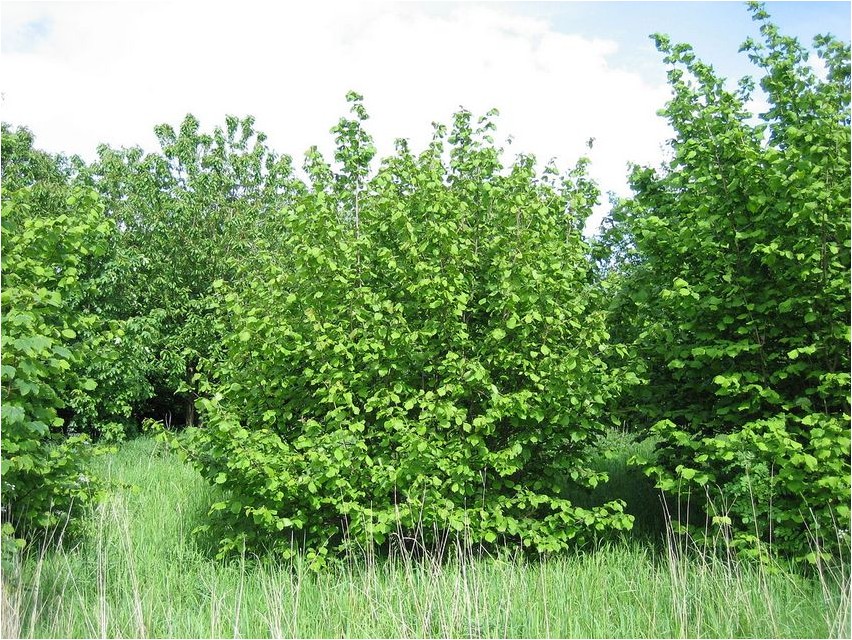
Common hazel is one of the plants of the family called hazel; in Latin the name of this plant will be as follows: Corylus avellana L.
As for the name of the common hazel family itself, in Latin it will be: Corylaceae Mirb.
Description of common hazel
Common hazel is known by the following popular names: orishina, hazel and hazel. This plant is a shrub endowed with gray-brown bark, the height of which will fluctuate between two and five meters. The leaves of common hazel are alternate and large, at the base they will be heart-shaped, short-petiolate, they can be either rounded or broadly obovate, along the edge such leaves will be double-toothed, and at the top they will be short-pointed. It is noteworthy that such leaves will be pubescent along the veins, on top they are colored in dark green tones, and below they will be lighter. The stipules of this plant are hairy and oblong-ovate. Common hazel blooms until the leaves bloom. The flowers of this plant will be staminate and unisexual; they can be in single earrings or collected in two to four earrings together. It is noteworthy that the pistillate flowers will be enclosed in flower buds, endowed with crimson tassel-shaped stigmas.
The fruit of the common hazel is an ovoid nut that will sit in a leaf-shaped wrapper called a plyus. The fruits ripen in August. For growth, this plant prefers forest, forest-steppe zones and the northern regions of the steppe strip of the European part of Russia and mountain forest regions of the Caucasus. Common hazel was introduced into culture in the Crimea, Azerbaijan, Georgia, the North Caucasus and Transcaucasia.
Description of the medicinal properties of common hazel
Common hazel is endowed with very valuable healing properties, and for medicinal purposes it is recommended to use the bark, fruits, leaves, roots, stems and oil that is obtained from the nuts of this plant. It is recommended to harvest leaves and fruits of common hazel during the summer season. At the same time, the bark of this plant is harvested around August-October or in early spring from those branches that should be removed.
The fruits of this plant contain a very significant amount of non-drying fatty oil, which contains saturated and unsaturated acids, proteins, iron salts, biotin, carbohydrates, carotene and vitamins B, C, E, PP. Common hazel leaves contain sucrose, myricitrosyl, essential oil and palmitic acid. The bark of this plant contains essential oil, betulin, lignoceryl alcohol, phlobaphenes and tannins.

It should be noted that until now in scientific medicine, preparations based on this plant have not yet been used very widely. However, it is known that the fruits of this plant have the ability to increase milk production in lactating women, help dissolve stones in urolithiasis, and are also endowed with a softening effect and will prevent the accumulation of gases in the intestines.
As for traditional medicine, the nuts of this plant ground with water are quite widespread. Such nuts are used for various pulmonary diseases, fever, urolithiasis, kidney stones, hemoptysis and flatulence. Common hazel kernels, peeled from the thin brown shell, are used with honey for anemia and rheumatism.





