male fern
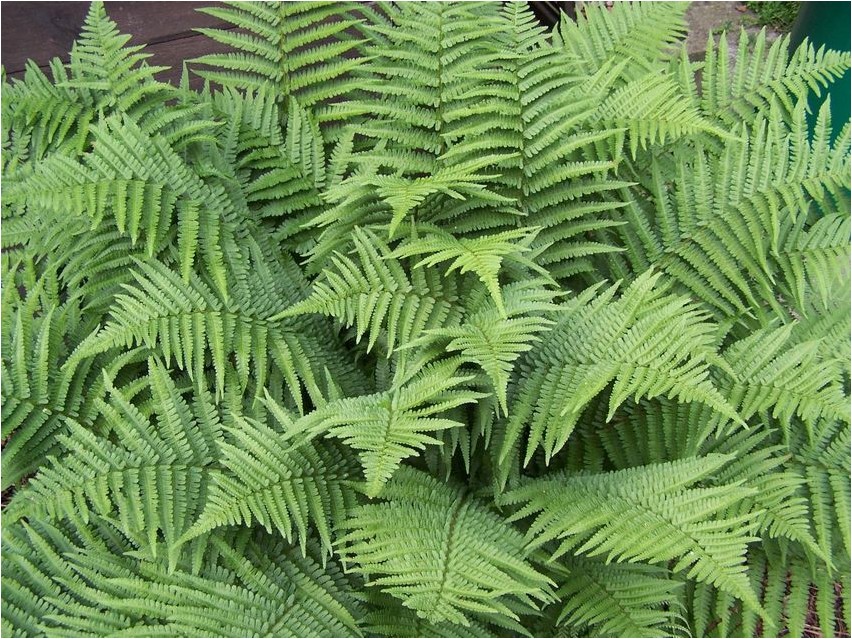
The male fern is one of the plants of the family called millipedes; in Latin the name of this plant will be as follows: Dryopteris filix mas (L.) Schott.
As for the name of the male fern family itself, in Latin it will be: Polypodiaceae.
Description of male fern
The male fern is a perennial herbaceous plant, the height of which will fluctuate between thirty and one hundred centimeters. Numerous thin roots and a bunch of large leaves will extend from the short and rather thick rhizome of this plant. Such leaves will be dark green and pinnately complex; they are located on long petioles, swollen at the very base, which in turn are covered with scales painted in rusty-brown tones. The young leaves of the male fern will be curled and they will grow at the top. The leaf blade of this plant is elongated-elliptical in outline, and at the apex it will be finely pointed. The first-order lobes of the male fern are short-petioled and they are dissected into second-order lobes with blunt and jagged edges. It is noteworthy that in the second half of the summer season, on the underside of the leaves, namely on the second-order lobes, sporangia with rounded shapes will develop. Such sporangia will be arranged in two rows along the vein, and they are also filled with numerous spores.
Under natural conditions, the male fern is found in Central Asia, Crimea, the European part of Russia, Ukraine, the south of Western Siberia and the Caucasus. To grow, this plant prefers shady forests and mountains, as well as places among stones.
Description of the medicinal properties of male fern
Male fern is endowed with very valuable healing properties, and it is recommended to use the rhizomes of this plant for medicinal purposes. Such raw materials should be harvested in the autumn from September to October or in the spring before the leaves begin to develop from April to May.
The presence of valuable healing properties is recommended to be explained by the content of phloroglucinol derivatives in the rhizomes of this plant, namely asidinophilicin, which in turn will decompose into aspidinol and phylixic acid. Actually, it is phylixic acid that will be the main active ingredient, which will cause paralysis of the muscles of tapeworms, and also promote their rejection from the intestines. In addition, this plant contains essential oil, sucrose, starch, wax, flavaspidic acid, albasidin, sucrose, bitterness and tannins.

As for traditional medicine, here this plant is quite widespread. Here, male fern is recommended to be used as a very effective anthelmintic. An infusion based on the rhizomes of this plant should be used externally in the form of baths, lotions and rubdowns for hemorrhoids, purulent wounds, ulcers, convulsive contractions of the leg muscles and rheumatism.
The juice of this plant is also used for various ulcers and wounds. In addition, traditional medicine recommends using a decoction based on the rhizomes of this plant internally for various venereal diseases and diseases of the sciatic nerve, while an alcohol tincture of this plant in the form of drops can be used for dry pleurisy.
It should be noted that there are known cases of relief from gout and articular rheumatism when sleeping on mattresses that were stuffed with fresh male fern leaves. However, it should be noted that this plant is poisonous and for this reason the use of male fern requires great caution.





