Lycopodium oblateus
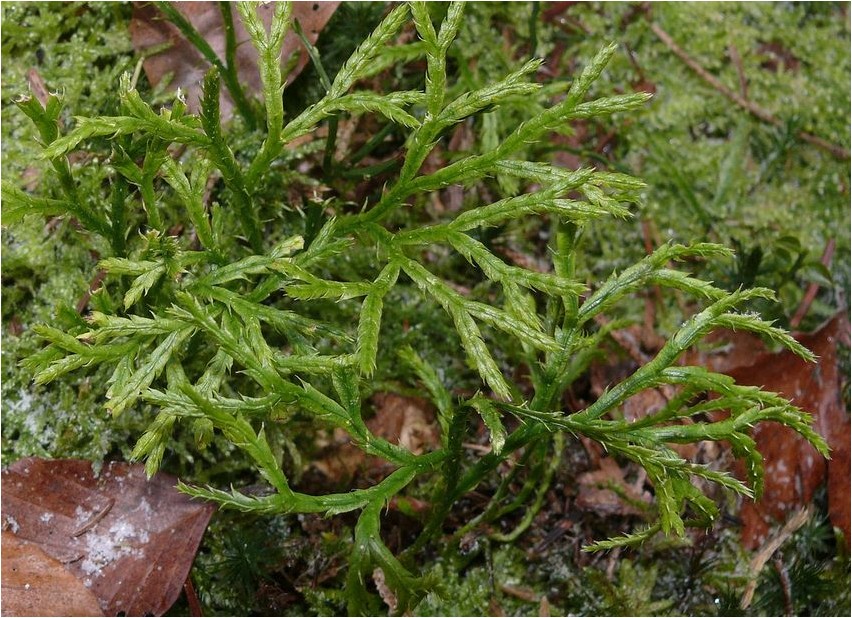
Lycopodium oblateus is a member of the Lycopodium family. Its Latin name is Lycopodium complanatum L. (Diphasiastrum complanatum (L.) Holub).
The Latin name of Lycopodium oblateus’s family is Licopodiaceae.
Description of Lycopodium oblateus
Lycopodium oblateus is known by many common names: mistle thrush, baranets, borovaya tsilka, bor-zille, bor-zele, zelenika, eryaba pustaya, zelenika, porushnik, and deryazhka. Lycopodium oblateus is a perennial herbaceous plant with a rather long, branched stem, which can reach a length of one and a half meters. This stem can be either almost aboveground or submerged. This stem bears ascending or erect branches, which will be provided with fan-shaped, flattened branches, and their length will be approximately thirty centimeters. The leaves of the Lycopodium oblatex will be opposite and scale-like, fused not only with each other but also with the stem. The lateral leaves of this plant will be dorsal, while the ventral leaves will be keeled and ventral, somewhat smaller than the lateral leaves or can be almost as long. The spore-bearing leaves of this plant are pointed and rounded-ovate, with spikelets approximately one and a half to two and a half centimeters long. They will be solitary or may be clustered in two or three on fairly long stalks.
In the wild, Lycopodium oblatex can be found in Siberia, Belarus, Ukraine, the Far East, and the European part of Russia. This plant prefers subori and pine forests and can sometimes be found in light tundra soils.
Description of the medicinal properties of Lycopodium oblateus
Lycopodium oblateus has very valuable medicinal properties, and the entire above-ground portion of this plant, including its spores, is recommended for medicinal purposes.
The presence of such valuable medicinal properties can be attributed to the plant’s content of glycerin, protein, sitosterol, phytosterol, sugar, and a non-drying fatty oil, which in turn consists of glycerides of arachidic, oleic, tanacetic, lycopodic, dioxystearic, oleic, and palmitic acids. The spores of this plant have very effective anticonvulsant, choleretic, hemostatic, and diuretic properties.

The spores of Lycopodium oblates are a fairly fine, free-flowing powder that is greasy to the touch, tasteless and odorless, and pale yellow in color. Interestingly, the spores of this plant can be used as baby powder for bedsores.
In folk medicine, this plant is quite widespread. An infusion made from the herb and spores of Lycopodium oblates is recommended for spasms, various ailments of the liver, kidneys, bladder, and gastrointestinal tract, and is also used as an anti-inflammatory for respiratory diseases. Externally, this infusion of spores is used for washes, poultices, and baths for a variety of skin conditions: wounds, bruises, boils, ringworm, scabies, itchy rashes, and skin lesions. The dry powder of this plant is indicated for use as a dusting powder on diaper rash and wounds. As a diuretic, add one tablespoon of the crushed dried herb to half a liter of boiling water. Boil the mixture, steep it, and strain thoroughly. Take one tablespoon of this medicinal Lycopodium oblateis (club moss) three times daily.





