annual woodweed
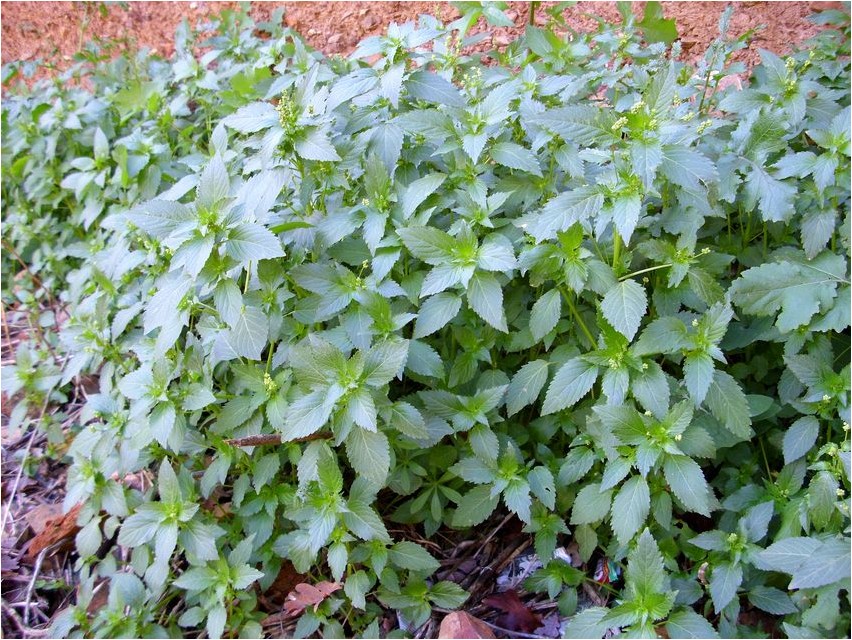
The annual woodweed is one of the plants of the family called Euphorbiaceae; in Latin the name of this plant will be as follows: Mercurialis annua L.
As for the name of the annual woodweed family itself, in Latin it will be: Euphorbiaceae Juss.
Description of the annual woodweed
The annual woodweed is an annual herbaceous plant, the height of which will fluctuate between twenty and fifty centimeters. The stem of this plant will be branched from the very base and most often such a stem is bare. The leaves of the annual woodweed will be ovate-lanceolate and opposite. The staminate flowers of this plant are collected in balls, which are located in the uppermost part of the axis in the form of an interrupted ear. Such a spike will be longer than the leaves and this value will be about three to ten centimeters, the calyx is tripartite, there will also be three sepals, they will be sharp and ovoid in shape. The length of such annual sepals will be about one and a half to two millimeters, they will be bare, and the number of stamens will be from eight to twelve. The diameter of the fruit of this plant will be about four millimeters, the seeds will be elliptical in shape and pitted, they are colored brown, and their length is about one and a half to two millimeters. This plant blooms in June, while the fruit ripens in July.
Under natural conditions, the annual woodweed is found in the Crimea, the European part of Russia, the Caucasus, the Dnieper region in Ukraine and the Black Sea region in Russia. For growth, this plant prefers fields, stubble and garbage areas.
Description of the medicinal properties of the annual woodweed
Annual woodweed is endowed with very valuable healing properties, and it is recommended to use the juice and herb of this plant for medicinal purposes. The concept of grass includes stems, leaves and flowers.
The presence of such valuable healing properties should be explained by the content of germidin dye, nitrogen-containing compounds and flavonoids in this plant. The roots of the annual woodweed will contain resins, tannins, essential oil, maltose, saponins and cyanogenic glycosides. Rubber and resins are present in the leaves and stems, while fatty oil has been found in the seeds of this plant.

Annual sablewort is recommended as a highly effective expectorant and mild laxative. The powder and juice of this plant can be applied externally to remove warts and calluses. However, it should be remembered that annual sablewort is a poisonous plant, so extreme caution should be exercised when handling it. Annual sablewort can damage the kidneys, bladder, and gastrointestinal tract.
A highly effective remedy based on this plant is recommended as an expectorant: to prepare this remedy, take one teaspoon of dried, crushed annual sablewort per two cups of boiling water. The resulting medicinal mixture should first steep for approximately one hour, after which it is recommended to strain the medicinal sablewort mixture very thoroughly. Take one tablespoon of this expectorant three times daily, regardless of meals. It should be noted that this remedy should only be used under the close supervision of a physician.





