Trichosanthes (Latin: Trichosanthes)
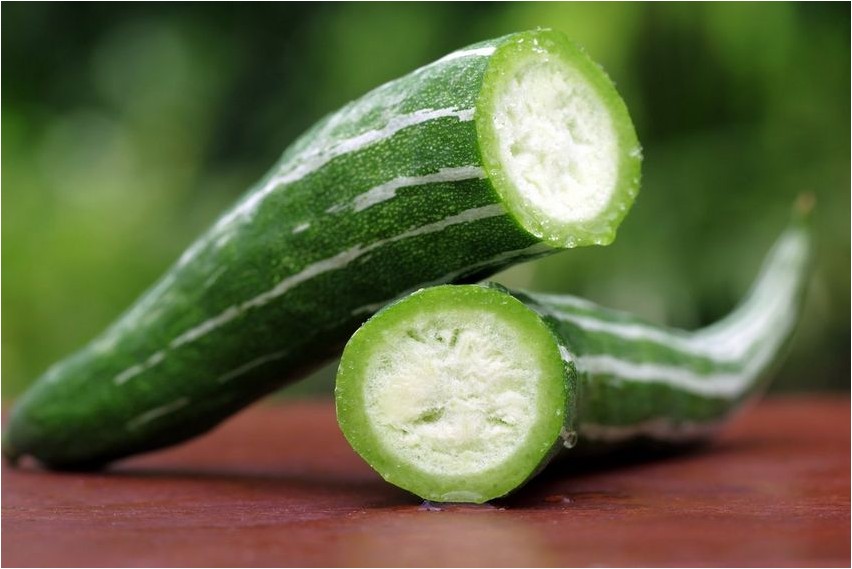
In some regions, trichosanthes is considered a vegetable, while in others, such as Southeast and South Asia, it is considered a fruit. Trichosanthes (Latin: Trichosanthes) is a genus of herbaceous climbing plants in the Cucurbitaceae family. It is also known as snake gourd. The plant is native to subtropical and tropical climates.
Crop Characteristics
Trichosanthus is an annual herbaceous vine cultivated for its long edible fruits, primarily in subtropical and tropical regions. In Russia, it is grown in greenhouses or indoors. Trichosanthes stems are slender, twining, up to 4 m long. The leaves are broad and lobed. The flowers are unisexual, fragrant, snowflake-shaped; female flowers are solitary, while male flowers are gathered in sparse racemes. The fruits are long and cylindrical, or, less commonly, short and narrowly cylindrical. The fruits have a thin skin and tender flesh. The fruits are greenish-white or green with light stripes. When ripe, the fruits turn red or bright orange.
Growing Tips
In central Russia, trichosanthes should be grown in a greenhouse with supports for climbing. If summers are hot with warm nights, it can be grown outdoors. The best predecessors are legumes, tomatoes, potatoes, early cabbage varieties, and green manure. It is not recommended to plant trichosanthes after members of the Cucurbitaceae family. The crop prefers aerated, fertile, light, and loose soils. Light loamy or sandy loam soils with a pH of at least 6 are optimal. Trichosanthes does not tolerate waterlogged soils. The plant is demanding in terms of humidity and air temperature. It does not tolerate frost, and even at 0°C (32°F), it dies. At temperatures of 10-15°C (50-59°F), growth slows, and at temperatures below 10°C (50°F), growth ceases completely.
Trichosanthes is grown from seedlings. Before sowing, the seeds are soaked in water. You can also try sprouting the seeds in damp sawdust. Place the seed containers close to a central heating radiator. The room temperature should be around 25-30°C. If all the above conditions are met, the seeds will germinate in 4-5 days. Sow the sprouted seeds around the first tenth of April. Plant them 1. 5-2 cm deep. Water the seedlings regularly, feed them, and provide them with good light. When the fifth leaf appears, pinch off the tips of the seedlings. This is necessary to encourage female flowers to form on the side shoots. Young plants are transplanted into open ground or a greenhouse at 45-50 days old. The soil for the plant is prepared in advance by thoroughly digging it over, adding compost or rotted manure, as well as potassium, nitrogen, and phosphorus fertilizers.
Care
Care is standard, as for all members of the Cucurbitaceae family. Moderate watering, weeding, fertilizing, and mulching are essential. Four to six applications of alternating organic and mineral fertilizers are necessary per season. With proper growing and care, plants are resistant to pests and diseases.
Uses and Benefits
Trichosanthus is used in cooking and folk medicine, often as an ornamental plant. Not only the fruits are edible, but also the stems, leaves, tendrils, and roots. In China, some species are used to make herbal medicines. The fruits of Trichosanthes are particularly decorative. Young fruits are mainly used in cooking. Teas with a slightly piquant bitterness are made from the green leaves. Trichosanthes looks very impressive in a garden, especially in the evening. It literally fills the entire garden with its exquisite jasmine scent.

Trichosanthes fruits contain a large number of vitamins and other beneficial substances, such as thiamine, riboflavin, and carotene. Therefore, regular consumption of trichosanthes supports and protects the immune system from negative environmental influences. The plant is beneficial for cardiovascular diseases, atherosclerosis, and paralysis. Trichosanthes is a powerful antioxidant. It is also essential for those suffering from thyroid disease. The plant”s root is used as a powder for eczema and various wounds. Trichosanthes seeds are used as a diuretic, antipyretic, astringent, and antiseptic.
Trichosanthes is a beneficial plant with delicious fruits.





