Garden turnip
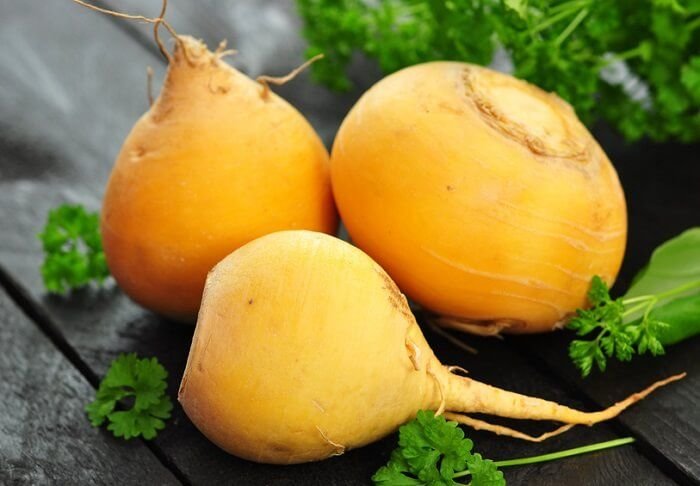
garden turnip is one of the plants of the family called cabbage or cruciferous plants; in Latin the name of this plant will be as follows: Brassica rapa L.
As for the name of the garden turnip family itself, in Latin it will be: Brassicaceae Burnett. (Cruciferae Juss.).
Description of garden turnip
Turnip garden is a biennial herbaceous plant, endowed with a fleshy root of white or yellowish color. It is noteworthy that, depending on the variety, such a root can have an oval, round or spindle-shaped shape. The stems of this plant are leafy and tall. In the first year, a rosette of leaves develops. Garden turnip flowers will be small in size, they form a racemose inflorescence, such flowers are painted in pale yellow or yellow tones. The fruit of this plant is a pod endowed with quite numerous seeds.
Garden turnips bloom in the period from May to August. Under natural conditions, this plant will be cultivated in Belarus, Ukraine and almost all regions of Russia. It should be noted that this plant can be grown in cultivation even beyond the Arctic Circle.
Description of the medicinal properties of garden turnip
Garden turnip is endowed with very valuable healing properties, and it is recommended to use the roots of this plant for medicinal purposes.
The presence of such valuable healing properties should be explained by the content of fiber, sugar, mineral salts, carotene, a significant amount of vitamins PP and CC, as well as vitamins B6 and B1 in the fleshy thick root vegetables of this plant. It should be noted that the mustard oil of this plant has the ability to impart a pungent taste and a very peculiar smell to turnips.

As for traditional medicine, here this plant is quite widespread. Garden turnip is endowed with a very effective diuretic, anti-inflammatory, wound healing, analgesic, mild laxative and antiseptic effect.
A decoction prepared from the root vegetable of this plant, as well as turnip juice, should be used for insomnia, laryngitis, bronchial asthma, cough, bronchitis and palpitations. For gout, it is recommended to apply boiled, mashed turnips to the affected areas, and use a warm decoction of turnips to rinse your mouth for toothache.
An ointment is prepared using two parts of fresh garden turnip and one part of goose fat, which is effective in treating frostbite. This plant is considered a valuable vegetable for the reason that it contains a large amount of vitamins, and turnip is also very nutritious. First of all, such properties will primarily concern the high mountain and northern regions.
It should be noted that turnip garden should be used in therapeutic nutrition for constipation.
For insomnia, bronchial asthma, bronchitis, laryngitis, palpitations and cough, you should use the following very effective healing remedy based on this plant: to prepare such a healing remedy, you will need to take two tablespoons of crushed turnip root in a glass of boiling water and boil the resulting mixture for about fifteen minutes. Take this medicine based on turnip garden, one glass at night or four times a day, regardless of food intake, one-fourth of a glass. If used correctly, such a medicine based on turnip garden will be very effective.
https://www. youtube. com/watch? v=suyIZM52HLc





