turnip
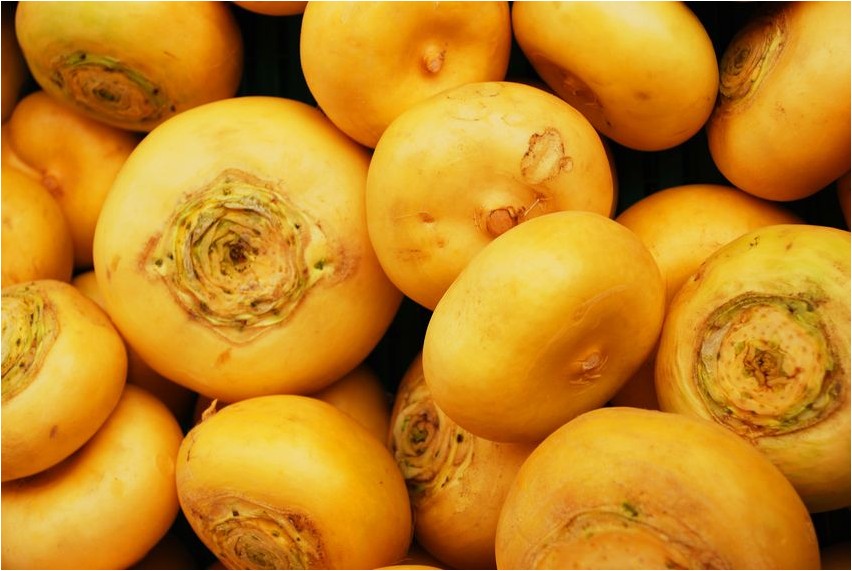
Turnip (Brassica rapa) is a biennial plant that belongs to the Cruciferous family.
History
The “ancestor” of the turnip is the rapeseed (field turnip). In the old days, turnips were widespread in Russia. It is not for nothing that one of the most popular Russian folk tales is the tale about the turnip, and not about the zucchini or cabbage. But the thing is that before the popularization of potatoes, the main vegetable in peasant farming was turnips, which were not only baked and boiled, but also fried and even fermented.
General characteristics
In the first year of growth, the vegetable develops a basal rosette of leaves, as well as a root crop. Stems, seeds and flowers grow only the next year.
Rosette leaves are often dissected, but occasionally they are whole. Leaves can be with or without pubescence. The leaf blade is shiny, thin, slightly wrinkled. May be rough to the touch.

The turnip root is fleshy, round in shape, sometimes flat-shaped. The peel and pulp are yellow or white. In the area of the head, the peel is reddish, purple and even slightly greenish.
A lack of enemies and soil conditions can cause turnips to taste bitter.
The root system of the plant is not very branched. There are few lateral roots, they are thin and grow deeply.
The inflorescence is a corymb, the flowers grow yellow-green or yellow-orange. The fruit is a pod with a long spout. Turnip seeds are small, round, brown in color, and quickly lose their viability.
Rules of care
The vegetative period of the plant is short — 2-2. 5 months.
Temperature . Turnip is a fairly cold-resistant crop. Seeds can germinate even at zero temperatures. Adult plants can withstand even frosts down t o-10°C. In favorable conditions, seedlings appear after 4-5 days. But turnips don’t tolerate heat well. The optimal temperature is 13-20°C.
Humidity . Lack of moisture causes the fruits to grow small and the flesh to be bitter. Therefore, if you want to get a decent and tasty harvest, you need to maintain moderate soil moisture throughout the turnip growing season and constantly water it, especially two to three weeks after germination, when the root crops are actively thickening.
Soil. Turnips grow best in light, sandy loam and loamy soils. Heavy, acidic soils are completely unsuitable for growing turnips. Turnips are sown in the second or third year after manure application. Fresh manure, however, adversely affects plant growth—turnips lose flavor and store poorly. It”s best to plant turnips in areas previously planted with potatoes, squash, beans, pumpkins, and cucumbers.
Sowing. Turnips are sown early (for example, in April). This can be done when the temperature reaches 2-3°C. Use 0. 1-0. 2 g of seeds per square meter and plant them to a depth of two to three centimeters. Incidentally, seeds can also be sown in late summer, for example, mid-August. It”s best not to sow earlier due to increased pest activity.
Watering. Turnips need to be watered generously and regularly, at least once or twice a week. Weeds must also be removed and the soil between rows loosened. Thinning of plants is also necessary. Turnips should be planted 7-10 cm apart.
Harvesting. Turnips are harvested as they ripen or as needed (to prepare a tasty treat). The harvest should be gathered before frost. Typically, it is abundant—approximately one and a half to three kilograms per square meter.





