Bergamot
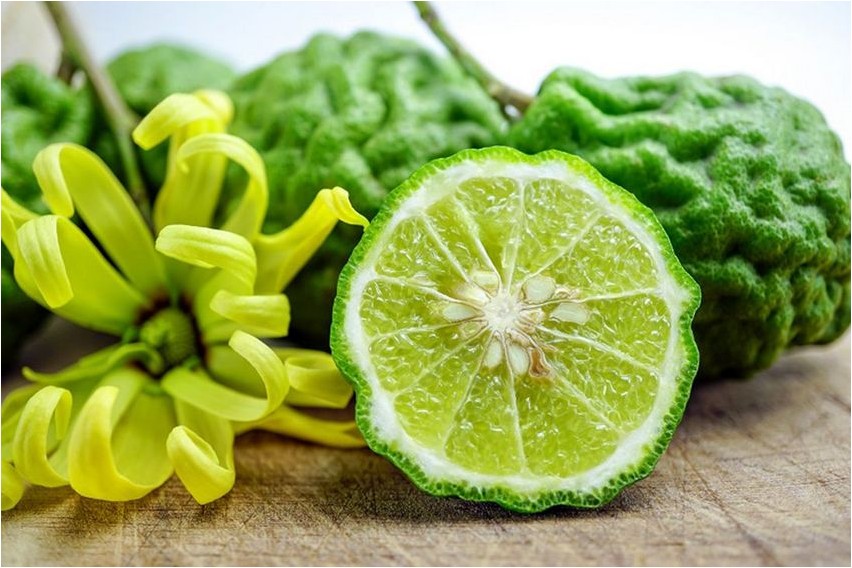
Bergamot (lat. Citrus bergamia) is a fruit crop from the Rutaceae family, which is the result of crossing citron with orange.
Description
Bergamot is a very successful hybrid of citron and orange, which received its name in honor of Bergamo, the Italian town where it once began to be cultivated.
Bergamot is an evergreen fruit tree, the height of which rarely exceeds ten meters, and in plantation conditions the average height of these trees is about two meters — short trees are much easier to care for, and it is much easier to pick fruits from them. That is why they try to restrain the growth of trees planted on plantations by pruning the upper branches.
All tree branches are covered with sharp, thin and incredibly long spines, the length of which can reach ten centimeters. Alternately arranged leathery and wavy bergamot leaves are attached to the branches using petioles. All of them are equipped with pointed tops, jagged edges and have an elliptical or ovoid-oblong shape. And the upper parts of the leaves are painted in darker colors and are characterized by a more pronounced shine than their lower parts.
Approximately in the middle of spring, spectacular bergamot trees begin to bloom with incredibly fragrant and quite large flowers, arranged singly or in the form of spectacular bunches of several pieces each. As for the color of the flowers, it can be either purple or white.
Bergamot fruits, covered with a thick peel consisting of three layers, are characterized by a pear-shaped or spherical shape. And their taste is sour and not disgusting, however, despite this, bergamot is still considered an inedible fruit. Among the pulp you can find several relatively small seeds. As a rule, fruits ripen at the end of autumn or at the beginning of winter.

Where does it grow
Despite the fact that bergamot cultivation began in Bergamo, the birthplace of this interesting culture is Southeast Asia. Small plantings of bergamot can be found in the USA (to be more precise, in the state of Georgia), and in Brazil or Argentina.
Application
Bergamot is valued mainly for its oil, which is extracted from both its flowers and leaves and from its peel. This oil is characterized by a bitter taste and a surprisingly pleasant and delicate balsamic aroma.
Bergamot essential oil is valued not only in the perfume industry, but also in the food industry — it makes an excellent tea flavoring. And bergamot tea can boast of very unusual properties — if you drink it regularly, it will help not only significantly improve your mental state, but also get rid of freckles or age spots.
Bergamot oil is especially widely used in aromatherapy and cosmetology. In aromatherapy, it is actively used to improve digestion, normalize blood pressure and get rid of depression or vegetative-vascular dystonia.
Quite often, bergamot oil is used to treat all kinds of ulcers, wounds, burns, eczema, various insect bites and psoriasis. It will also serve well for various ailments of the genitourinary system. In addition, this oil has a pronounced antiviral and restorative effect, and is also a fairly powerful aphrodisiac.
And cosmetics containing bergamot oil effectively relieve redness and itching, significantly reduce the secretion of sebum, perfectly tighten pores and make the skin healthy and velvety.
Contraindications
Since bergamot is a citrus crop, eating its fruit or peel can lead to allergic reactions, which can manifest as headaches, as well as feelings of nausea or weakness. In some cases, dizziness or skin rashes may appear. And women are not recommended to eat bergamot during pregnancy or on the eve of menstruation — this can cause uterine contractions, which will result in premature menstruation or, even worse, miscarriage.
As for bergamot oil, it is strictly not recommended to apply it to the skin before going sunbathing — painful sunburn may appear in the areas where it is applied.





