Broadleaf bug
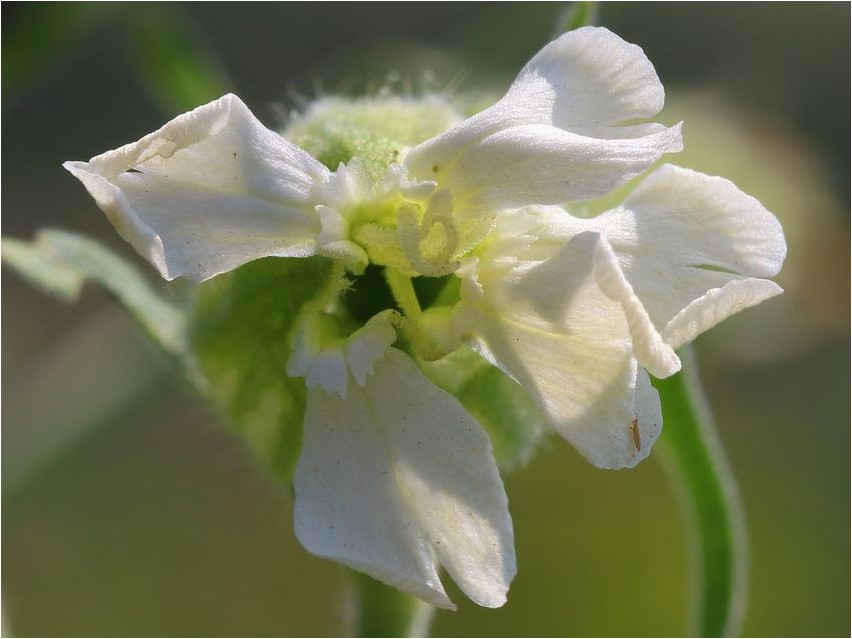
The broadleaf bug is one of the plants of the family called cabbage or cruciferous plants; in Latin the name of this plant will be as follows: Lepidium latifolium.
As for the name of the broadleaf bug family itself, in Latin it will be: Brassicaceae Burnett.
Description of the broadleaf bug
Broadleaf bug is a perennial herbaceous plant, the height of which will fluctuate between forty and one hundred and fifty centimeters. The plant may be glabrous or slightly pubescent. The stems of the broadleaf bug are paniculate, while the leaves will be leathery, oblong, entire and sometimes narrow. The basal leaves are long-petiolate while all other leaves will be sessile and the upper leaves are at the apex endowed with a white border. The brushes of the broadleaf bug are collected in a corymbose or pyramidal panicle, the sepals are almost round in shape, they are painted white, and the length of the sepals is about two to three millimeters. The pods of this plant are round, the seeds will be flattened, they are endowed with a border and are almost smooth.
The broadleaf bug blooms from May to July. Under natural conditions, this plant is found in the Crimea, the European part of Russia, the Caucasus, Western Siberia, Ukraine and Central Asia. As for the general distribution, this plant can be found in Iran, Tibet, the Himalayas, India, Scandinavia, the Mediterranean, Atlantic and Central Europe. For growth, the broadleaf bug prefers salt marshes, meadows, salt licks, wet places, river and stream valleys, rocky slopes, saline places in the steppe, marshy banks of reservoirs and pebbles, ranging from plains to the mid-mountain zone. It should be noted that this plant is a weed in crops and areas near housing. It is noteworthy that this plant is not only a honey plant, but also a valuable insecticide.
Description of the medicinal properties of the broadleaf bug
The broadleaf bug is endowed with very valuable healing properties, and it is recommended to use the seeds, roots, leaves and grass of this plant for medicinal purposes. The concept of grass includes the flowers, leaves and stems of the broadleaf bug.
The presence of such valuable healing properties should be explained by the content of tannins, alkaloids, saponins, organic acids, vitamin C and flavonoids in the plant. The seeds of the broadleaf bug contain fatty oil, thioglycoside sinigrin and mustard oil.

As for traditional medicine, decoction and infusion of herbs, roots and leaves of this plant are quite widespread. Such valuable remedies are recommended for use in various skin diseases and wounds, scurvy, ascites, toothache, joint pain, toothache, as well as disorders of the nervous and digestive systems. It is noteworthy that the essential herb extract of this plant is endowed with very valuable antibacterial properties.
A decoction prepared from the seeds of the broadleaf bug is recommended to be used as a remedy that has very valuable abilities to have a stimulating effect on the stomach.
Young shoots and leaves of this plant can be used as a rather original and spicy seasoning for various dishes, and such parts of the broadleaf bug can also be used as a salad. For rinsing with toothache, use a decoction, which can also be used as a wound-healing agent in the form of lotions.





